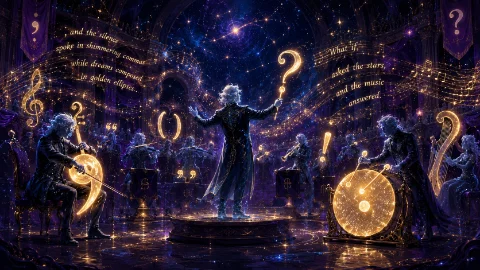
The Silent Symphony of Reading
When a reader opens your book, they are not just looking at ink on a page. They are listening to a voice inside their head. Every sentence has a natural cadence, and your punctuation marks serve as the sheet music that guides that internal voice. If you only use periods and commas in exactly the same way on every page, your soundtrack will become a monotonous drone. To craft literature that truly resonates, you must learn to conduct your sentences.
Instruments of Punctuation
Think of your punctuation marks as different sections of an orchestra. Each symbol alters the flow of time and changes the emotional weight of your words.
The Comma as a Breath
The comma is your woodwind section. It requires the reader to take a tiny, almost imperceptible breath. A well-placed comma creates suspense, separates complex ideas, and slows down the pacing of a scene. Conversely, removing commas entirely can simulate panic, breathlessness, and high-speed action.
The Period as a Drumbeat
The period is the bass drum. It is a full, undeniable stop. A long, flowing paragraph filled with descriptive commas lulls the reader into a gentle trance. Dropping a short sentence with a hard period right at the end of that paragraph wakes them up immediately. It creates a sudden silence that forces the reader to absorb the impact of your words.
Controlling the Pacing
Here is a quick guide to understanding how different marks affect the tempo of your narrative soundtrack.
| Punctuation | Musical Equivalent | Effect on the Reader |
|---|---|---|
| Period | Bass Drum | A complete stop, offering absolute finality and impact. |
| Comma | Flute | A short intake of breath, slowing the pace slightly. |
| Question Mark | Rising String Section | An upward inflection, creating curiosity or lingering doubt. |
| Exclamation Point | Cymbal Crash | A loud, abrupt noise that should be used sparingly. |
Composing Your Draft
The next time you sit down to edit your manuscript, put away your red pen and read the words aloud. Listen to where your voice naturally rises and falls. If a paragraph feels sluggish, you might need to add a few hard stops. If a scene feels disjointed, you might need to weave the thoughts together with gentler punctuation. When you master the musicality of these symbols, your writing will truly sing.