Some of the most unsettling stories in dystopian and horror fiction follow characters who slowly or suddenly stop being recognizable to themselves and others. This process, often called identity collapse, explores what happens when the core of a person is eroded by trauma, societal pressure, physical transformation, or extreme circumstances.
Rather than focusing only on external threats, these narratives turn inward. They show how the self can fracture, dissolve, or transform into something new and often disturbing. When handled well, identity collapse becomes one of the most emotionally and thematically powerful elements in a story.
Why Identity Collapse Resonates in These Genres
Dystopian and horror stories frequently examine what it means to be human when that humanity is under attack. Identity collapse takes this examination even deeper. It asks not just what the world does to people, but what people become when they can no longer hold on to their previous sense of self.
These stories can explore themes of autonomy, memory, morality, and belonging in visceral ways. They also create a unique kind of dread. It is one thing to fear an external monster or oppressive system. It is another to watch a character become something they once feared or despised.
Readers often connect deeply with these narratives because the fear of losing oneself is universal, even if the circumstances in the story are extreme.
Techniques for Tracking Identity Collapse
Show gradual change rather than sudden transformation.
The most believable and unsettling collapses usually happen over time. Small shifts in behavior, thought patterns, relationships, and self-perception accumulate until the character (and the reader) realizes how far they have drifted from who they once were.
Use changes in voice and internal monologue.
One of the clearest ways to show identity collapse is through shifts in how a character thinks and speaks. Their internal voice may become more fragmented, colder, more detached, or strangely calm in situations that should provoke strong emotion.
Track changes in relationships.
How others respond to the character can reveal how much they have changed. Former allies may pull away. New, unsettling bonds may form. The way a character is treated by those around them often reflects their shifting identity before they fully recognize it themselves.
Use physical and sensory details.
In both dystopian and horror stories, the body can become a site of identity collapse. Changes in appearance, sensation, or physical capability can mirror or accelerate psychological changes. These details make the transformation feel concrete and visceral.
Show what the character clings to and what they let go.
Identity is often defined by what we value and protect. As a character collapses, show which parts of themselves they fight to keep and which they abandon. This struggle creates emotional depth and moral complexity.
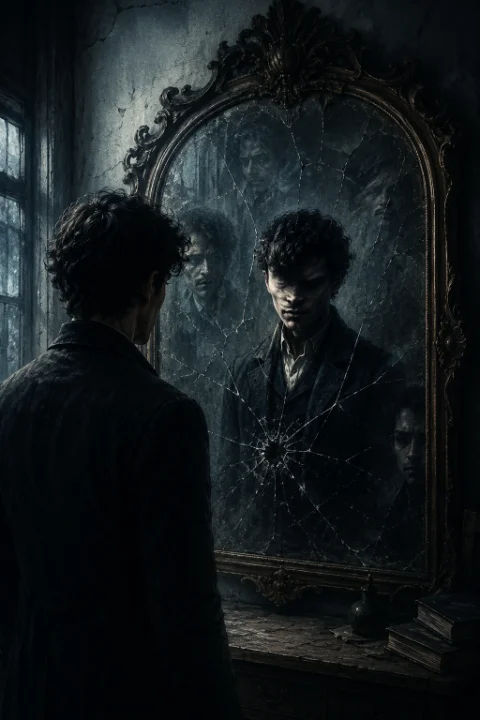
Create moments of recognition and denial.
Powerful scenes often occur when a character catches a glimpse of who they have become and either recoils or rationalizes it. These moments of painful self-awareness can be turning points in the narrative.
Examples That Handle Identity Collapse Effectively
Many memorable dystopian and horror stories center on characters whose sense of self erodes under pressure. Some explore this through physical transformation, others through psychological or social forces. The strongest examples do not treat identity collapse as a simple plot device. Instead, they use it to explore deeper questions about humanity, autonomy, and survival.
These stories often stay with readers because they capture the quiet horror of watching someone (or oneself) slowly become unrecognizable.
Common Pitfalls
One risk is rushing the collapse. When a character changes too quickly or without sufficient buildup, readers may not feel the emotional weight of the transformation.
Another common issue is making the collapsed identity feel completely alien or one-dimensional. Even when a character becomes something disturbing, they are often more compelling if traces of their former self remain.
Be careful not to lose reader connection entirely. If the character becomes too detached or unrecognizable too early, readers may struggle to stay emotionally invested in their journey.
Finally, avoid using identity collapse only for shock value. When the transformation serves the story’s deeper themes, it becomes far more powerful.
Practical Exercises
Choose a character in your current story and write a short scene from early in the narrative. Then write the same type of scene from much later, after significant change has occurred. Compare how their voice, thoughts, and behavior have shifted.
Take a moment of crisis in your story and show how the character’s response reveals a change in their values or self-perception.
Write a scene in which the character encounters something or someone from their past and reacts in a way that shows how much they have changed.
Experiment with a gradual transformation. Write three short scenes showing the same character at the beginning, middle, and end of their identity collapse. Focus on small, accumulating differences.
The Horror and Power of Losing Yourself
Identity collapse sits at the heart of many great dystopian and horror stories because it taps into a fundamental fear: the fear of no longer recognizing the person we have become. These narratives force both characters and readers to confront difficult questions about what makes us who we are and what happens when those foundations are stripped away.
When written with care and emotional honesty, stories of identity collapse do more than frighten or disturb. They explore the fragile, resilient, and sometimes terrifying nature of the self. They remind us that in extreme circumstances, survival can come at the cost of everything we once believed defined us.
The most haunting versions of these stories do not always end with complete loss. Sometimes the most powerful moments occur when a character catches a final glimpse of who they used to be, even as they move further into the unknown.
What stories of identity transformation or collapse have stayed with you? Have you written characters who slowly become unrecognizable to themselves? Share your thoughts and examples in the comments. The Indie Reading Community enjoys exploring these deep and unsettling themes in fiction.