
About the Book
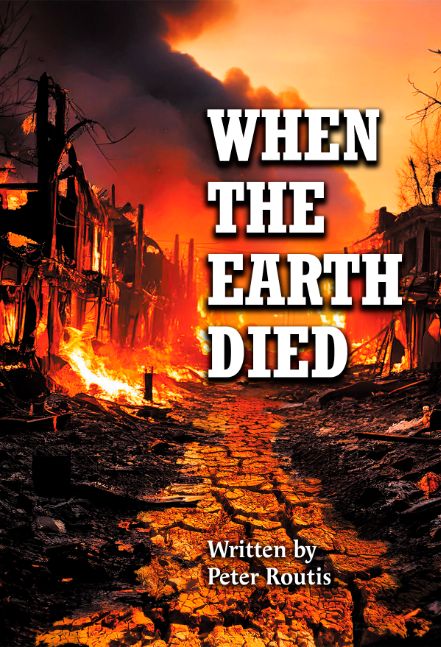
In 2049, following decades of unchecked, human-driven climate change, Earth has been reduced to a wasteland of ash, fractured civilizations, and scattered survivors struggling to endure the consequences of an irreversibly altered world.
Synopsis: When the Earth Died
"When the Earth Died" is a literary novel complete at approximately 89,000 words. Winner of the International Impact Book Award (Contemporary Fiction/Literary Fiction, April 2025), it will appeal to readers of The Road, Station Eleven, Parable of the Sower, and Margaret Atwood's Oryx and Crake. Blending a stark post-apocalyptic setting with a deeply character-driven narrative, the novel explores resilience, grief, and the enduring search for meaning in the aftermath of environmental collapse.
Orson, a contemplative survivor, moves through the ruins burdened by the collapse of both the natural world and the fragile systems that once sustained it, grappling with questions that have no clear answers. Niles is driven by a singular purpose: to find his sister, Aberdeen, lost during the inferno that destroyed their childhood home. Ciara, fiercely protective of her young son Kolten, is determined to preserve not only their lives but a fragile sense of stability in a world where trust is dangerous, and survival demands constant compromise.
Together, they attempt to rebuild, constructing shelters, growing food, and navigating the dual threats of a hostile environment and desperate, unpredictable survivors. But as resources dwindle and tensions rise, survival alone is no longer enough. Each must confront the consequences of human failure, the weight of personal loss, and the deeper question of what it means to remain human in a world stripped of order, morality, and certainty, contemplating the existence (or absence) of God. As hope becomes increasingly fragile, they are forced to confront not only the reality of what has been lost but the unsettling uncertainty surrounding meaning, responsibility, and the possibility or absence of something greater in the silence that remains.
Orson’s anticipated death forces the members of the camp to confront the uncertainty of survival without the leadership, protection, and support he has provided. However, Orson’s influence extends beyond his physical presence, as he has equipped them with the knowledge and skills necessary to endure. Through his teachings on hunting, shelter construction, food cultivation, and self-defence, Orson has prepared the camp to withstand not only the challenges posed by the natural world but also the threats of an oppressive government and violent gangs. His legacy becomes a source of resilience, demonstrating that his greatest contribution is not merely his protection, but the independence and strength he instilled in others. Orson ensures that the camp can endure even in his absence. His teachings transform the group from dependents into survivors capable of facing future challenges on their own.
My discussion with Dr. David Suzuki (to whom I have dedicated this book) about When the Earth Died was both insightful and encouraging. He appreciated the book's central premise and the sense of hope woven throughout the story. Although he expressed reservations about the title, suggesting that the Earth is not dead, he recognized and valued the message the book conveys.
Sample Chapters
Language - English
Publisher Name - Inkwell Books
Publisher Year - 2024
ISBN-10 - 979-8-9917268-1-8