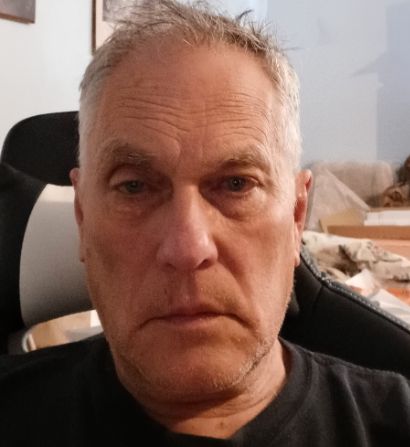
-
Q: Hello Ronald Schulz. What kind of books do you write?
I write memoirs that read like novels. My life has been a great adventure since I ran away to New Orleans at age fifteen, and I have lived on the road, hitchhiking around from the Rocky Mountians to across Africa to Nepal where I studied Buddhism under Lama Yeshe and Lama Zopa. My books are published by Tumbleweed Books, and available on Amazon, Barnes & Noble, Kobo, AbeBooks, Better World Books, Bookshop.org, pretty much everywhere. And also can be found on the Worldcat, listings. This is the site libraries use to locate and buy or borrow books from, so can order from your library to read, see how you like it before you buy. No matter where you find my books, please leave a review.
-
Q: Tell us a little about yourself. Where you’re from, where you live, your hobbies, interests or anything else the listeners might find interesting.
I'm originally from Chicago, where I was involved with the radical anti-war and Civil Rights movements back in the 1960s, but I live in Seattle now, and I will be turning 75 in March. I'm a married grandpa of 3, semiretired, and teaching health requirements for caregivers with my wife. Traveling is our passion, although I'm not getting off the grid like I used to, which my books chronicle, and these days just keeping busy writing my books gives me great satisfaction. When I'm not writing I enjoy nature, walks through the woods or when I can, rare these days, I ride horses and socialize.
-
Q: What got you started as a writer?
I’m a history buff, curious about our complex world, and what makes us tick. I’ve read widely and the idea of documenting our lives for future generations always intrigued me, but it was pushed to the back of my mind because I was too busy living and exploring. Things finally slowed down as I got older, and I used my lay-off periods from jobs to begin jotting down and fact checking some episodes. Meditation helps to go deep into memory and take notes, which are my primary resourse.
-
Q: Are you working on any other books? If so what are they?
My next book in the pipeline is Chasing Karma, which takes us into 1970 to 1971, the story of how our Chicago bunch of radical hippies started an organic commune in Wisconsin. And as follow-up to that comes Catching Karma, which I’m still working on when I have a moment. It takes us through the action packed year of 1972, including an epic Odyssey of loves-lost and won-trekking through the Great West from the Colorado Rockies to the redwoods of California. .
Following that I am writting several books about wandering over Europe, Africa to the Near East with a stopover in Jordan and working in Israel's Negev King Soloman’s Mines where my boss and his family were killed in a terrorist attack while on vacation in Jerusalem, and across the Sinai desert, a land of wonder. And then via Cypris to Turkey and overland to Nepal. All that on the cheap in 1975 and 1976, which allowed me to interact with people directly. It was a grand journey so I’m taking it slow to get it right. I tell myself “patience, please!”
-
Q: Who are some of your favorite authors and why are these your favorites?
For true to life fiction I like Mark Twain and Charles Dickins, who delved into the human condition. But for nonfiction that probes even deeper to become my childhood heroes I especially love Victor Frankl, who wrote Man's Search for Meaning, and Rudi Vrba, whose book I Cannot Forgive, helped me survive the dark suicidal depression that I sank into during my school years. My tastes run to the international, as to me we are all comrades in life’s struggle. The Egyptian Nawal El Saadawi, who wrote Woman at Point Zero and the Polish Resistance leader Kazimierz Moczarski, who wrote Conversations with an Executioner while awaiting trail imprisoned with a Nazi War Criminal. They stand out to me for their courage and honesty.
-
Q: What inspired you to write your books?
I recognize that we all play a part in the great, never-ending drama of our collective journey. Life is short, but writing bridges the gap in our trans-generational communication. Even our kids cannot know us, because by the time they're old enough to understand, most of us have passed on, without much explanation.
I have lived on every continent and had a variety of occupations. Thus I've gotten to know the simple and complex sides of human interaction, which I try to share in my books. Reading is the best doorway to looking inward for understanding our own hidden motives and also outward to feel empathy for others.