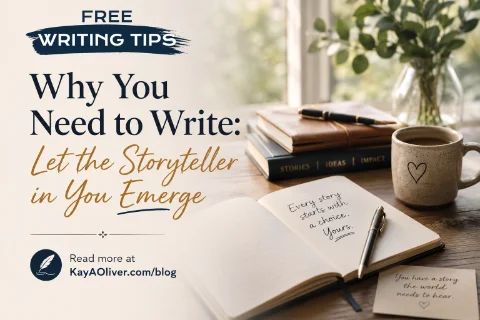
Why You Need To Write - Let The Storyteller in You Emerge
Long before books existed, stories were how people connected. Stories taught lessons, preserved history, and inspired change. Storytelling is woven into who we are as human beings.
Author-written articles on reading habits, book culture, writing life, and indie publishing. Fresh perspectives from the community, every week.
Long before books existed, stories were how people connected. Stories taught lessons, preserved history, and inspired change. Storytelling is woven into who we are as human beings.
Every character in your story is living through a completely different novel. Multi-perspective storytelling is the art of letting several of those novels exist at once, without any of them canceling each other out.
Writer's block is not a creativity problem. It is almost always a fear problem, a structure problem, or a burnout problem. Once you know which one you are dealing with, fixing it becomes a lot more straightforward than staring at a blank page hoping for inspiration.
It was there the whole time. That single thought, arriving a hundred pages later, is what foreshadowing is built to produce, and it is one of the most reliable ways fiction earns a reader's trust.
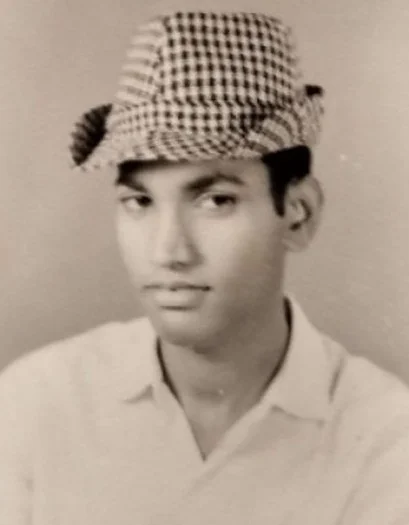
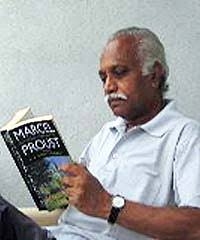
Who would have thought that life held such literary possibilities in English language for a rustic Telugu lad in rural Andhra even in post-colonial India? The possibilities of life are indeed novel, and seemingly my life has crystallized itself in my body of work before death could dissipate it.
A great plot does not just move forward. It moves with purpose. Every scene earns its place, every twist pays off something planted earlier, and by the last page, the reader feels it could not have ended any other way. Here is how to build that.
Most writers know their characters' eye color, their childhood, and their favorite drink. What they miss is the one thing that makes a character feel real: the wound they have never fully admitted, even to themselves.
Before beat sheets and structural diagrams, there is this simpler shape. Every elaborate framework writers study is built on top of beginning, middle, and end, and returning to this foundation is often the clearest way to fix a story that feels structurally lost.
Readers do not just follow your story. Their brains live inside it. Here is what neuroscience and narrative psychology tell us about why some fiction grips readers completely — and how you can write that way on purpose.
Most writers learn craft for years before learning the business that turns a manuscript into a book. This guide breaks down both paths, traditional and independent, so you know exactly what happens at each step and who is involved.
Writing a novel is only the first step in a much larger journey. Discover the inner workings of the publishing industry, from mastering advanced editing techniques to securing a literary agent and launching a successful freelance career.
A pen name is a publishing identity layered on top of a legal one, nothing more. It does not change who owns the copyright, who gets paid, or who signs the contract. Understanding that distinction makes the decision to use one far easier to get right.
Writing the book is only half the job. The other half is everything that happens after you type the last word. Here is what every indie author needs to know about editing, publishing, freelancing, and building a writing career that actually lasts.
The story has not changed. What has changed is everything around it. Here is how writers are using new technology, virtual worlds, and advanced dramatic craft to tell stories that could not have existed ten years ago.
A weak villain drags your entire story down. A great villain makes your protagonist feel necessary. Here is how to build an antagonist readers will remember long after the last page.
The unreliable narrator depends on a strange contract. The reader has to trust the voice enough to keep listening while the story quietly builds the case that the voice cannot be trusted at all. Get that balance wrong and the twist either lands as a cheap trick or loses the reader's patience long before it arrives.
The best dialogue in fiction is never about what characters say. It's about what they refuse to say. Here's how to write the tension that lives between the lines.
Every great novel has something to say beneath the plot. That argument is your thematic statement, and it may be the most important sentence you write before Chapter One.