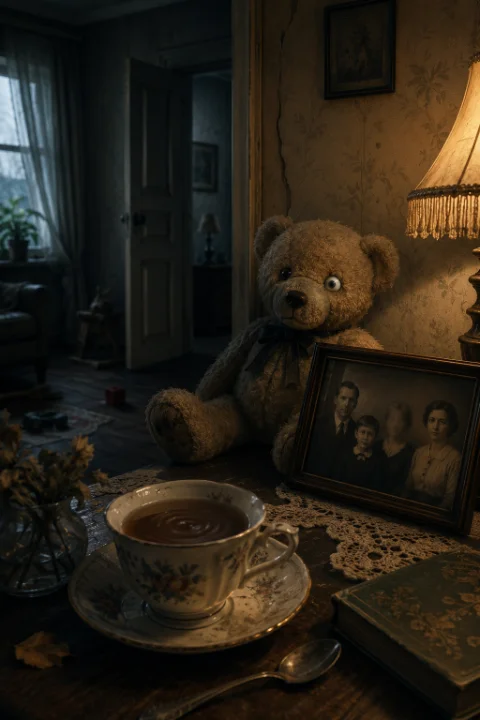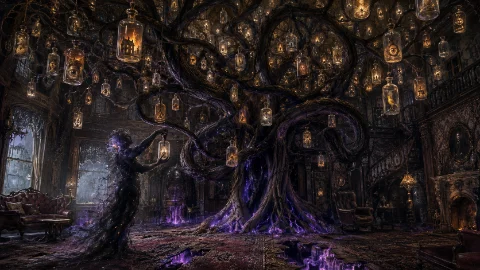
The most profound stories do not feel as though they were typed on a keyboard yesterday. They feel as though they were unearthed from a weathered wooden box in a damp attic. When drafting family sagas and exploring the murky waters of generational trauma, your goal is to write literature that feels entirely inherited. You are not just building a narrative. You are tracing the bizarre, glowing roots of a family tree deep into the soil of their collective past.
Mainstream fiction often treats trauma as a simple hurdle for a character to jump over. But independent authors who value intentional storytelling know that real trauma is a landscape. It is a strange, overgrown forest where the protagonists of today are constantly tripping over the buried mistakes of their ancestors. Writing this effectively requires stepping away from formulaic beat sheets and embracing a surreal, echoing approach to character development.
The Echo in the Bloodline
To write generational trauma, you must understand that pain is an heirloom. It is passed from parent to child as surely as the color of their eyes or the shape of their jaw. However, this inheritance rarely looks the same in the next generation. It mutates.
A grandfather’s terrifying experience of extreme poverty might not manifest as financial anxiety in his grandson. Instead, it might mutate into an obsessive, surreal need to collect porcelain birds, filling every room of his house until there is no space left to breathe. The trauma has shape-shifted into a bizarre form of hoarding control. When you draft characters whose quirks are anchored in ancestral wounds, they stop being mere archetypes. They become intricately layered human beings. This is the exact caliber of depth that thrives in spaces dedicated to intentional curation, where independent book lovers actively hunt for stories that resonate beyond the surface.
Weaving the Non-Linear Tapestry
Trauma does not experience time in a straight line. It loops, repeats, and suddenly drags the past into the present moment without warning. Your narrative structure should reflect this dizzying reality.
When drafting these deep family sagas, allow the timeline to bleed. A scene of a mother baking bread in the present day can seamlessly dissolve into a terrifying memory of her own grandmother fleeing a burning village. Do not announce these shifts with clunky transitions. Let them overlap like two photographs printed on the same surreal piece of film. By weaving timelines together, you show the reader exactly how the past is literally constructing the present. This non-linear architecture demands more from the reader, making it the perfect approach for literature that explores the grey areas of human resilience.
The Artifacts of Memory
Finally, ground the ethereal nature of generational trauma in physical, everyday objects. An inherited wound needs a physical anchor in the story to make it real for the audience.
Perhaps the trauma is tied to an old, tarnished pocket watch that never keeps the correct time. The protagonist might feel a sudden, inexplicable wave of nausea every time the watch chimes. The watch is not just a prop. It is a ticking, metallic ghost. It represents a history the character does not fully understand but is forced to carry anyway.
By utilizing these surreal artifacts and abandoning the need for clean, linear resolutions, you craft narratives with phenomenal staying power. You create haunting, unforgettable sagas that feel less like fiction and more like a secret shared between generations.