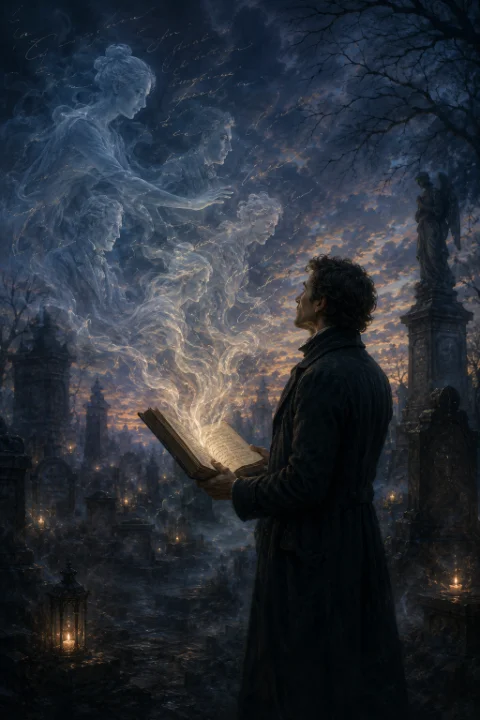
Writers have always been in the business of resurrection. We reach into the past, whether it belongs to nations, families, or our own earlier selves, and attempt to bring voices back into the present. This act can feel like a kind of necromancy: a deliberate summoning of the dead so they can speak again through fiction.
Some writers conjure historical figures. Others summon ancestors whose stories were never recorded. Still others resurrect earlier versions of themselves or lost relationships. In each case, the writer stands at the threshold between what was and what might be, using language to give the silenced or forgotten a second chance to be heard.
This approach carries both power and responsibility. When done with care, it can create profound emotional and historical resonance. When done carelessly, it can distort or exploit what it claims to honor.
Why Writers Turn to This Form of Conjuring
Many writers feel a deep pull toward the past. They want to understand where they come from, to give voice to people whose stories were erased or ignored, or to explore how history continues to shape the present.
Writing as necromancy offers a way to do this work imaginatively rather than purely factually. Fiction allows us to fill in the gaps that archives and memory leave behind. It lets us imagine the inner lives of people we can never truly know and to ask questions that history alone cannot answer.
This impulse is especially strong in stories that deal with migration, colonization, war, family secrets, and inherited trauma. By bringing these voices forward, writers can create a sense of continuity and accountability across generations.
Techniques for Conjuring Voices Effectively
Ground the voice in specific detail.
The most convincing resurrected voices emerge from concrete, sensory details of daily life. What did they eat? How did they move through their environment? What small rituals or habits defined their days? These details make the past feel inhabited rather than abstract.
Use language that feels alive to the character.
Avoid overly formal or archaic language unless it serves the voice. Instead, focus on rhythm, vocabulary, and thought patterns that suggest a particular time, place, and personality. The goal is not perfect historical accuracy in speech, but emotional authenticity.
Let the past speak to the present.
Strong necromantic writing usually creates a dialogue between then and now. The resurrected voice should illuminate something about the contemporary world, or the contemporary narrator should be changed by their encounter with the past.
Embrace partial knowledge and invention.
You cannot know everything about someone who lived in another time. The gaps are part of the story. Use invention responsibly to fill those gaps in ways that feel true to the spirit of the person or era rather than simply convenient for the plot.
Consider multiple perspectives.
Sometimes the most powerful approach is to show how different people remember or interpret the same events. This can prevent the story from flattening complex histories into a single narrative.
Pay attention to what the voice wants.
Treat the character you are conjuring as having their own desires and agency. Ask what they would want to say if given the chance, rather than only what serves your thematic goals.
Examples of This Approach in Literature
Many powerful novels function as acts of literary necromancy. Some bring historical figures to life with imaginative depth. Others resurrect ordinary people whose lives would otherwise be lost to time. Still others explore how personal and family histories continue to haunt the present.
These works succeed when the summoned voices feel necessary rather than decorative. Readers sense that the story could not exist without this act of bringing the past forward.
Pitfalls to Avoid
One risk is romanticizing the past or turning historical suffering into aesthetic pleasure. Another is speaking for people whose voices were silenced without sufficient research or humility.
Some writers fall into the trap of using the past primarily as a backdrop for contemporary concerns rather than engaging with it on its own terms. Others become so concerned with accuracy that the writing loses imaginative life.
Be especially careful when writing about trauma or marginalized histories. These stories carry extra weight and deserve particular care in how they are imagined and presented.
Practical Exercises
Choose a historical figure or ancestor about whom you know relatively little. Write a short monologue in their voice, focusing on one ordinary day. Then revise it after doing additional research.
Take a family story or personal memory that has been passed down to you. Write it from the perspective of someone who experienced it directly, then write a second version from the perspective of someone who only heard about it later.
Select a scene from your current project that involves the past. Experiment with bringing one additional voice from an earlier time into the scene, even if only briefly.
Write a short piece in which a contemporary character has a direct encounter (real or imagined) with someone from their personal or historical past. Focus on what each figure wants from the other.
The Responsibility of Resurrection
Writing as necromancy is never neutral. When we bring voices back, we are making choices about what to emphasize, what to invent, and whose stories get told. These choices have consequences.
At its best, this form of writing creates connection across time. It allows the dead to speak to the living and gives the living a way to reckon with what they have inherited. It can be an act of love, of mourning, of justice, or of simple curiosity.
The key is to approach the work with both imagination and accountability. Respect the complexity of the lives you are conjuring. Do the research. Listen carefully. And remember that even when we give the past a voice, we are still speaking through our own present moment
.The graves we choose to visit and the voices we choose to raise say something important about who we are as writers and as people.
What voices from history or your own past have you felt compelled to bring into your writing? Have you encountered stories that felt like powerful acts of literary resurrection? Share your thoughts and examples in the comments. The Indie Reading Community is rich with writers who are drawn to this kind of work.