Writing is one of the few crafts where your imagination becomes a map other people can walk through. For indie authors in any genre, thinking of writing as a guided dream can change how you create and how you connect with readers.
Writing as a guided dream for indie authors
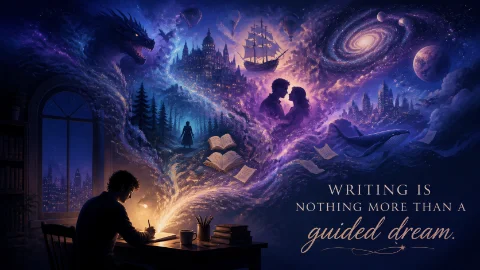
Jorge Luis Borges described writing as nothing more than a guided dream, and indie authors live that truth every day. You take a private inner world and slowly turn it into chapters that strangers can feel, see, and remember.
For self published writers, this dream is not just about art. It is the foundation of your entire career. Your stories are the core of your brand, your marketing, and your relationship with readers. When you treat each project as a guided dream, you create work that feels alive enough to carry all that weight.
Opening the doorway to your story world
Every new book begins when you step through an invisible doorway in your mind. It might be a single image, a character voice, or a question that refuses to let you go. The moment you decide to follow it, the dream starts.
Indie authors often juggle drafts, edits, and promotion at the same time. It is easy to treat stories like products instead of experiences. Returning to the doorway image can help. Ask yourself what kind of dream you want a reader to enter when they click “buy” on your book. Is it tender, dangerous, funny, unsettling, hopeful. The answer shapes every creative decision.
Guiding the dream across every genre
Whether you write romance, thriller, fantasy, science fiction, horror, or literary fiction, you are still guiding a dream. The difference lies in the rules of the world and the emotional tone.
In romance, you guide readers through a dream of longing, connection, and emotional payoff.
In thriller and mystery, you guide them through tension, secrets, and revelation.
In fantasy and science fiction, you guide them through strange worlds that must still feel emotionally true.
In horror, you guide them through fear and unease while keeping a strong sense of control.
Each genre has its own expectations, but the core remains the same. You are leading readers on a journey they cannot predict but can trust.
Balancing structure and surrender
Indie authors quickly learn that structure matters. You outline to save time, hit genre beats, and keep your plot from wandering. At the same time, the best scenes often arrive when you let the dream surprise you.
Guided dreaming means using structure as a scaffold, not a cage. You know your main turning points, but you stay open to unexpected dialogue, new side characters, or twists that arrive mid draft. Later, in revision, you become the architect and make sure these surprises still serve the larger story.
This balance matters even more when you publish regularly. If you cling too tightly to formulas, your work feels mechanical. If you refuse structure, your series may lose readers. The middle path allows you to write efficiently without losing magic.
Letting your subconscious do its work
The idea of a guided dream reminds you that writing is collaboration with your subconscious. The symbols that keep appearing across your books, the themes you return to, the patterns in your characters are all signals.
Instead of fighting those patterns, indie authors can lean into them. Your recurring images become part of your personal brand. Your favorite emotional beats become part of your voice. Over time, readers come to your work for a particular flavor they cannot find anywhere else.
You do not need to fully understand every symbol. You need to notice them, respect them, and give them space on the page. Later, readers will tell you what those dreams meant to them from the outside.
Inviting your reader into the dream
In self publishing, you design the entire path a reader takes into your dream. The cover, blurb, sample pages, and first chapter are the threshold.
A clear, genre appropriate cover tells readers what kind of dream they are about to enter.
A focused blurb introduces the core conflict and emotional stakes without giving away the whole journey.
Strong first pages build trust that you can guide them through the experience without confusion or boredom.
Think of these as lanterns at the entrance. If the path is lit, readers will keep walking. If it feels unclear or misleading, they step back.
Marketing as an extension of the dream
Indie authors often feel that marketing is separate from writing. In reality, every piece of promotion can extend the guided dream.
Social media posts can offer glimpses of your world, not just announcements.
Newsletters can read like letters from inside the dream, sharing process, behind the scenes moments, and bonus scenes.
Author websites can feel like portals with excerpts, maps, playlists, and character profiles that expand the experience.
When you treat marketing as storytelling, it becomes less of a chore and more of an extra canvas. The same dream reaches readers in different shapes.
Practical habits for dream guided writing
To turn this idea into practice, indie authors can adopt simple habits that work across genres.
Begin each writing session with a quick mental visit to your story world so you enter feeling immersed.
Use a one line dream statement for each project such as “This is a story about hope in a broken city” and keep it visible near your desk.
Draft with enough speed to stay close to the emotional flow, then revise slowly to strengthen structure.
After each book, reflect on which scenes felt most dreamlike and alive, then look for ways to reproduce that energy in future projects.
These small actions ensure that your catalog grows from a coherent inner vision rather than scattered experiments.
Standing back and letting the dream live
Once you publish, the dream no longer belongs only to you. Readers bring their own histories, moods, and hopes into your work. You cannot control that. You can only offer the clearest, most honest version of the dream you had.
Some people will love it. Some will not. Reviews will be varied. Sales will rise and fall. Through all of it, your job is to keep guiding new dreams, book after book. Over years, those dreams weave together into a body of work that only you could have created.
For indie authors in any genre, this is the quiet reward. You build a life where your inner worlds support your outer one. Your stories feed your career. Your guided dreams become places other people return to again and again