Magical realism is a literary style where extraordinary or impossible events are presented as a completely ordinary part of everyday life. A character might float into the sky, speak to the dead, or grow flowers from grief, and nobody in the story treats this as strange. There's no big reveal, no explanation, and usually no shock. The magic is simply woven into reality, treated with the same matter-of-fact tone as the weather or a cup of tea.
This is what sets it apart from fantasy. Fantasy tends to build new worlds with their own internal logic, often explaining how magic works through systems and rules. Magical realism does the opposite. It keeps the real world fully intact, with its politics, its history, its ordinary streets and families, and simply allows the impossible to exist within it, unremarked and unexplained.
Where the Genre Comes From
Magical realism is most strongly associated with Latin American literature of the twentieth century, particularly the work of Gabriel García Márquez, whose writing helped define the style for a global audience. But the technique itself has roots and parallels well beyond that region, appearing in folklore-influenced storytelling across many cultures where the line between the spiritual and the everyday has never been drawn as sharply as Western literary tradition tends to draw it.
The term itself originally came from art criticism before being applied to literature, used to describe paintings that depicted dreamlike or fantastical imagery within otherwise realistic scenes. The literary version inherited that same spirit: realism and the impossible, sitting side by side without friction.
How It Differs From Other Speculative Genres
The genres around magical realism are easy to mix up, so a quick comparison helps.
Fantasy introduces magic as something distinct from reality, often with rules, systems, and an acknowledgement from characters that something unusual is happening.
Paranormal fiction treats the supernatural as an intrusion into an otherwise normal world, something characters notice, react to, and often have to investigate or explain.
Magical realism skips the reaction entirely. Nobody investigates the flying carpet or the talking river. It simply is, and the story moves on. The absence of astonishment is the whole technique.
Why Writers Use It
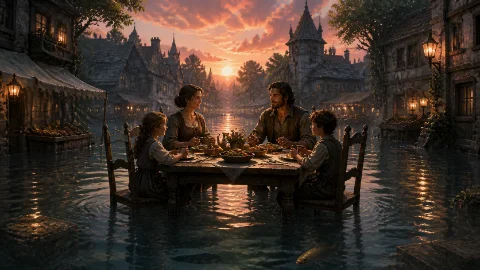
Magical realism is rarely magic for its own sake. Writers tend to reach for it when something about lived experience, grief, colonial history, displacement, memory, resists being captured by strict realism alone. A character who literally carries the weight of the past on their back, or a town that floods every time a secret is kept, can say something about emotional or political reality that a purely realistic scene might struggle to convey with the same force.
This is part of why the genre carries so much weight in postcolonial and diasporic literature specifically. It offers a way to represent experiences, trauma, displacement, inherited memory, that don't always fit neatly into linear, rational storytelling.
Common Misconceptions
A few mix-ups come up again and again.
It's not the same as fantasy. Fantasy announces its magic. Magical realism absorbs it into the fabric of normal life without comment.
It's not a synonym for "anything weird happens in a literary novel." The defining feature is the lack of reaction. If characters are shocked, confused, or investigating the strange event, the story has likely drifted into another genre, such as surrealism or slipstream fiction.
It's not whimsical by default. Plenty of magical realism is heavy, political, and emotionally serious. The gentleness people associate with the genre comes from tone, not subject matter.
Tips for Writing Magical Realism
The hardest part for most writers is restraint. The instinct to explain the impossible event is strong, but explanation tends to break the spell. The magic needs to be presented with total narrative confidence, as though there's nothing here worth a second glance.
It also helps to root the impossible in something emotionally true. A flying mother in a story about a parent leaving the family carries weight precisely because the magic mirrors something real underneath it. Magical realism tends to fail when the impossible event feels random rather than resonant.
Discovering More Magical Realism
Readers drawn to this genre often find some of the richest, most inventive work happening outside mainstream commercial publishing, where authors have more room to experiment with form and tone. It's a genre that rewards patience and close attention, since the magic often says more about the story's emotional truth than any plot twist ever could.