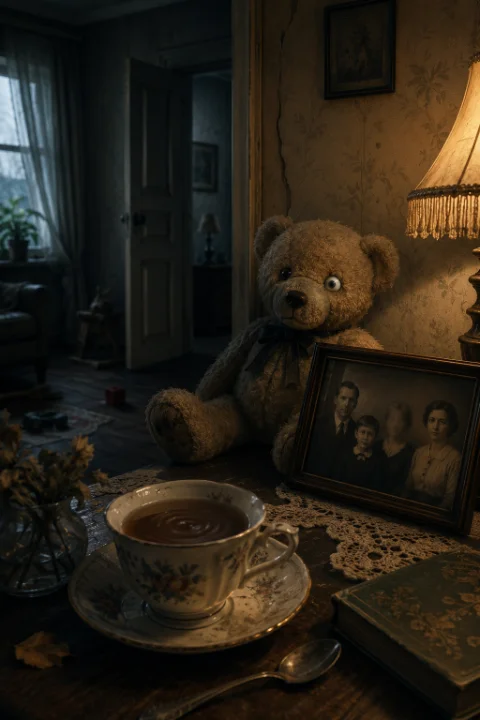
Some of the most effective horror and unease in fiction comes not from monsters or dramatic events, but from the things we see and use every day. A child’s toy. A kitchen knife. A photograph on the wall. When these ordinary objects begin to feel wrong, the dread cuts deeper because it invades spaces that should feel safe.
This technique, which we can call the elegy of the familiar, works by taking something comforting or neutral and slowly revealing its darker potential. It mourns the loss of safety in the everyday while creating tension that feels intimate and inescapable.
Why Everyday Objects Create Such Strong Dread
Readers bring their own associations to familiar objects. A teddy bear usually suggests comfort and childhood. A ringing phone suggests connection. When these associations are twisted, the effect is visceral. The object does not need to be supernatural to feel threatening. It only needs to behave in a way that violates our expectations.
This approach also makes horror more accessible and believable. Not every reader relates to haunted mansions or ancient curses, but almost everyone has felt a flicker of unease when something ordinary suddenly feels off. By using everyday items, writers can create dread that feels personal and immediate.
In dystopian and psychological stories, these objects can also represent control, loss, or the slow erosion of normal life.
Techniques for Turning the Familiar into Something Dreadful
Start with accurate, affectionate detail.
Describe the object as it normally is before introducing anything unsettling. The more lovingly or precisely you render its ordinary qualities, the stronger the contrast becomes when it turns strange.
Use repetition and subtle change.
Show the object multiple times throughout the story. Each appearance can carry a small shift. A clock that always ticked steadily might now skip a beat. A photograph that once brought comfort might now seem to watch the character. These gradual changes build unease without needing dramatic reveals.
Tie the object to the character’s emotions or memories.
The dread becomes stronger when the object carries personal meaning. A wedding ring, a childhood blanket, or a favorite mug can become unsettling when it begins to represent something lost or threatening.
Let the object act in small, impossible ways.
You do not always need overt horror. A door that should not be open. A light that turns on by itself. A shadow in the corner of a familiar room. These minor violations of normal behavior can be more disturbing than grand gestures.
Use sensory details to make the wrongness physical.
Focus on how the object feels, smells, or sounds in ways that contradict its usual nature. A soft blanket that feels slightly damp. A favorite song playing from an empty room. These sensory contradictions create immediate discomfort.
Connect the object to larger themes.
In dystopian or psychological stories, everyday items can represent systems of control or the erosion of privacy and autonomy. A government-issued item or a once-personal possession that has been altered can carry both personal and political dread.
Examples That Use This Technique Effectively
Many memorable horror and speculative stories rely on the transformation of ordinary objects. A child’s toy that moves on its own. A piece of clothing that no longer fits the way it should. A household appliance that behaves in unsettling ways. These moments stay with readers because they take something safe and make it feel dangerous.
The best examples do not over-explain the change. They allow the object’s altered behavior to speak for itself, letting readers feel the wrongness before fully understanding it.
Common Pitfalls
One risk is overusing the technique. If too many ordinary objects become sources of dread, the effect can become diluted or feel gimmicky.
Another mistake is making the transformation too sudden or unexplained. Readers are more likely to accept the unease if it builds gradually and feels connected to the story’s atmosphere or the character’s state of mind.
Be careful not to rely only on objects without emotional context. The dread is strongest when the object matters to the character or carries symbolic weight beyond its strangeness.
Practical Exercises
Choose one ordinary object from your daily life and write a short scene in which it begins to behave slightly wrong. Focus on the character’s growing awareness rather than a big reveal.
Take a scene you have already written and add one familiar object that carries emotional weight for the character. Revise it so the object contributes to the tension or unease.
Write two versions of the same moment: one where a character interacts with an ordinary object in a normal way, and one where the same object feels subtly threatening. Compare the difference in atmosphere.
List five everyday objects that appear in your current story. For each one, brainstorm one small way it could become a source of dread.
The Power of What Should Be Safe
The elegy of the familiar works because it removes the distance between the reader and the threat. When horror lives in a child’s drawing, a half-empty glass of water, or a coat hanging on the back of a door, it feels closer and more personal.
These objects remind us that safety is often an illusion. The things we trust most can become sources of unease when the world shifts around them. By paying close attention to the ordinary and allowing it to turn strange, writers can create dread that feels quiet, persistent, and deeply unsettling.
The most lasting horror often does not announce itself with screams or monsters. It simply makes the familiar feel like it no longer belongs to us.
What everyday objects have unsettled you in stories you have read? Have you used ordinary items to create tension or dread in your own writing? Share your examples in the comments. The Indie Reading Community enjoys exploring these subtle and powerful techniques.