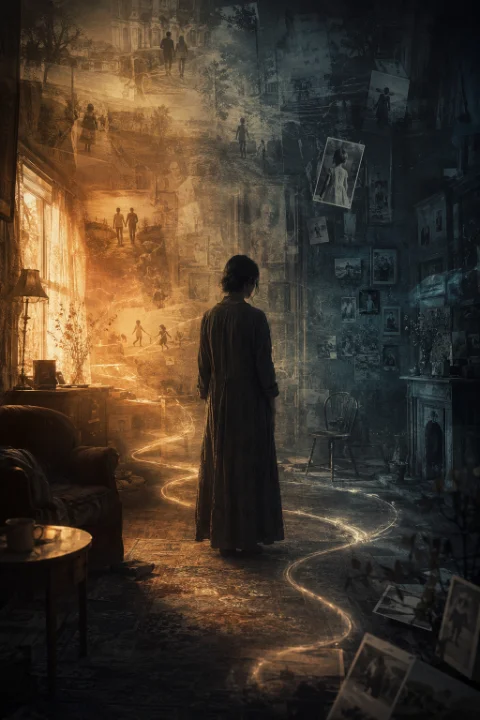
Every character carries invisible maps inside them. These maps are drawn from memory, shaped by pain, and marked by the places where something broke or changed forever. When writers make setting function as this kind of map, the physical world stops being background and becomes a living record of the character’s inner life.
This approach, which we can call the cartography of memory, turns locations into emotional landmarks. A childhood bedroom, a stretch of road, a particular tree, or an entire city can hold layers of meaning that surface through the character’s interactions with the space. Readers begin to understand trauma not only through what characters say or do, but through where they go and how they move through those places.
When done well, the setting does not simply reflect trauma. It actively participates in revealing it.
Why Setting Works as a Trauma Map
Trauma often lives in the body and in specific locations. A smell, a sound, or the angle of light in a room can trigger memories that feel as real as the present moment. By anchoring these responses in concrete places, writers make abstract psychological experiences tangible and immediate.
This technique creates natural opportunities for discovery. As characters return to or avoid certain spaces, readers learn what happened without needing long explanations. The setting becomes evidence. It holds clues that characters may try to ignore or reinterpret.
It also adds emotional texture. A place that once felt safe can become threatening. A location tied to loss can carry both comfort and pain. These contradictions mirror how trauma actually functions in real life.
Techniques for Mapping Trauma Through Setting
Identify the key locations first.
Choose two or three places that matter deeply to your character’s history. These do not need to be dramatic. Often the most powerful maps are built from ordinary spaces that became charged through repetition or a single defining event.
Use sensory triggers tied to place.
Let specific details in the environment activate memory. The creak of a particular floorboard. The way light falls across a kitchen table at a certain hour. The sound of wind through a particular window. These small, recurring sensory elements can carry enormous emotional weight.
Show evolution in the setting.
Allow the same location to change over time in ways that reflect the character’s relationship to their trauma. A room that was once avoided might later be reclaimed. A landscape that felt hostile might slowly reveal moments of unexpected beauty or safety.
Let characters navigate the map differently.
How a character moves through a space reveals their internal state. Someone might take the long way around a certain street. Another might linger in a place others would rush through. These choices become a form of storytelling.
Layer past and present.
Use the setting to create moments where past and present overlap. A character standing in a current location might suddenly experience it as it was years earlier. This technique makes the trauma map visible without breaking the flow of the narrative.
Connect setting to relationships.
Other characters can interact with the same spaces in ways that highlight different layers of the map. What one person sees as neutral ground, another experiences as charged territory.
Examples That Demonstrate the Approach
Many powerful stories use setting as a living record of trauma. Houses that hold family histories, cities marked by loss or violence, and natural landscapes tied to pivotal moments all serve as maps that characters must navigate. In some works, the environment itself seems to remember what happened, responding to the character’s presence in subtle or unsettling ways.
These examples succeed because the setting is never incidental. Every significant location earns its place by revealing something essential about the character’s inner geography.
Pitfalls to Watch For
One risk is making the connections too obvious or symbolic. When every detail in a room directly represents a specific wound, the effect can feel heavy-handed. Subtlety and accumulation usually create stronger resonance.
Another common issue is overusing the same location without variation. If a character returns to the same charged space repeatedly without new emotional movement, the map can become static rather than dynamic.
Be careful not to let the setting carry the entire emotional burden. The character’s actions, thoughts, and relationships should still drive the story. The environment supports and reveals rather than replaces character development.
Finally, avoid treating trauma as purely negative. Many characters find unexpected strength, clarity, or connection through their relationship with places that once hurt them. Allowing room for complexity makes the map feel more honest.
Practical Ways to Develop Your Own Trauma Maps
Start by listing three locations that matter to your protagonist. For each one, note what happened there (or what the character believes happened) and how the character feels about returning.
Write a short scene in which your character enters one of these spaces after a long absence. Focus on sensory details and small physical reactions before moving into thoughts or dialogue.
Experiment with a return scene. Have the character visit a significant location and notice one new detail that shifts their understanding of what happened there.
Read a favorite book and identify any locations that seem to hold emotional history for the main character. Notice how the author uses those spaces across different scenes.
The Power of Emotional Geography
When setting becomes a character’s trauma map, the story gains a quiet but profound depth. Readers begin to read the world alongside the character. They learn to notice what the character notices and to feel the weight of certain places without being told directly.
This approach respects the way trauma actually lives in people. It is rarely contained in neat explanations. Instead, it lingers in the corners of rooms, along familiar roads, and in the way light falls on ordinary surfaces.
By treating setting as emotional cartography, writers create stories where place and person are inseparable. The land, the house, or the city remembers alongside the character. And in remembering together, both can sometimes begin to heal.
What places in stories have stayed with you as powerful maps of memory or trauma? Have you used setting in this way in your own writing? Share your thoughts and examples in the comments. The Indie Reading Community loves exploring these layered connections between character and place.