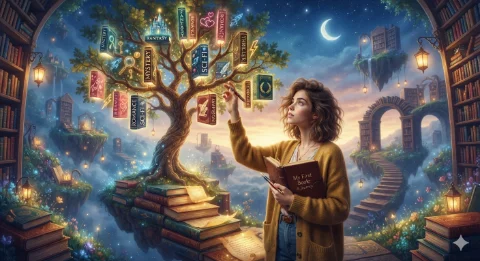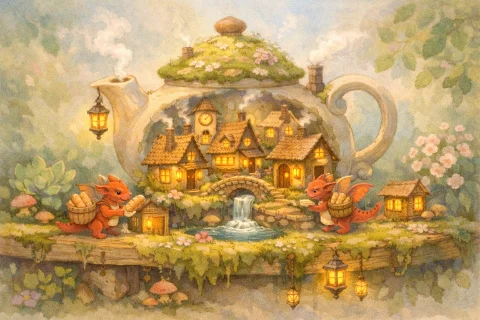
Most fantasy trains its lens on the extraordinary: the chosen one, the last battle, the fate of kingdoms. Slice-of-life fantasy points the lens the other way. It cares about breakfast in a witch's kitchen, the argument between a wizard and his cranky familiar, the season a small village spends preparing for a magical festival. The plot is life itself, gently enchanted. The stakes are small, personal and deeply felt, and that turns out to be more than enough.
What Makes Slice-of-Life Fantasy Different
The genre owes much to Japanese storytelling traditions, where slice-of-life has been a beloved category in manga and anime for decades. Series like Flying Witch, Laid-Back Camp and Studio Ghibli's gentler films shaped the emotional grammar: quiet observation, seasonal detail, small revelations. In Western fiction, works like Diana Wynne Jones' cosier novels and, more recently, the wave of cosy fantasy led by books like Legends and Lattes have carried the same spirit.
Three qualities tend to mark a slice-of-life fantasy story. First, magic treated as ordinary, woven into daily routines rather than saved for grand climaxes. Second, plots that follow relationships, seasons and small projects rather than escalating conflicts. Third, an attention to sensory detail: the smell of a potion shop, the sound of rain on a wizard's roof, the taste of pastries at a fae market. The genre invites you to slow down and simply be in the world.
Why Readers Love It
Slice-of-life fantasy fills a very specific need: the wish to visit a magical world without being asked to save it. These books are ideal for the end of a hard day, when you want wonder without stress. The absence of high stakes is not a weakness but a feature, giving room for character, craft and atmosphere to breathe.
The genre also honours the emotional truth that most of life is not made of climaxes. It is made of ordinary days linked together, and finding beauty in those days is a skill worth practising. Slice-of-life fantasy trains that skill gently, one enchanted afternoon at a time.
Where to Start
Legends and Lattes by Travis Baldree remains a lovely gateway, along with Heather Fawcett's Emily Wilde books for something a little more literary. Manga fans can begin with Flying Witch or Witch Hat Atelier for the visual version of the mood. From there, wander into indie territory, where slice-of-life fantasy is quietly booming. Independent authors are writing witchy cafes, apprentice tales, magical village novellas and gentle found-family stories at a pace and warmth mainstream publishing struggles to match.