Most writers think of abandoned drafts as evidence of failure. They live in forgotten folders, old Scrivener backups, or documents with names like Novel Draft 4 Final Real Final. Once a manuscript changes direction, those earlier versions often get treated like waste.
That is a mistake.
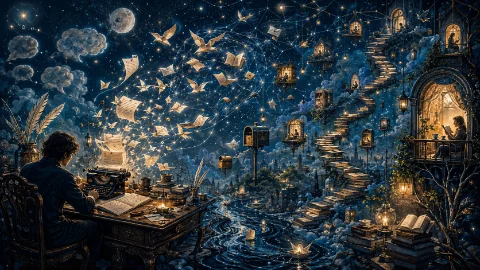
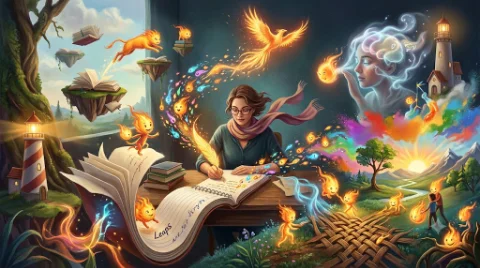
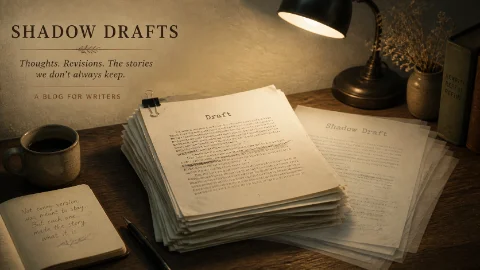
Old novel drafts are rarely useless. Even when they are structurally broken, overwritten, or attached to an idea you have outgrown, they often contain emotional logic your current manuscript no longer has. They hold earlier instincts, alternate character choices, lost tensions, and scenes that may not belong on the page anymore but still belong in the story’s deeper history. I think of these as shadow drafts. They are not the official version of the novel, but they still cast shape and meaning across it.
If you learn how to use them well, abandoned versions of your novel can become hidden canon. They can help you recover depth, sharpen motivation, and rebuild the inner architecture of a book that has become too clean.
Why Old Drafts Still Matter
A draft you leave behind is not always wrong. Sometimes it is simply carrying material in the wrong form. A subplot may have been cut for pacing even though it revealed something essential about a relationship. A discarded opening may have slowed the story down, yet captured the protagonist’s loneliness better than anything in the current version. A character may have behaved messily in an earlier draft in ways that now feel more human than your revised, tidier version.
This happens because revision tends to privilege efficiency. As writers, we cut repetition, reduce detours, streamline scenes, and tighten arcs. All of that is useful. But sometimes the process also scrubs away residue. The strange sentence. The awkward reaction. The unnecessary scene that was not technically necessary at all, but carried a buried truth.
That is why old drafts matter. They preserve earlier emotional knowledge. They remember what the story once knew before you optimized it.
What Hidden Canon Means
When I say hidden canon, I do not mean every deleted scene should be restored or every abandoned plotline deserves another chance. I mean that some discarded material still belongs to the private reality of the novel, even if readers never see it directly.
Think of it this way. A character may have had a full argument with their father in an older draft. You cut the scene because it interrupted the pacing. Fine. But the argument may still reveal how that character deflects blame, what kind of silence exists in the family, or why they hesitate when someone offers help. The scene may be gone, but the knowledge inside it should not vanish.
That is the best use of shadow drafts. They become background truth. They inform gesture, subtext, and reaction. They deepen the story without necessarily reappearing as full scenes.
This is especially helpful in literary fiction, character-driven fiction, and emotionally layered commercial fiction. Readers do not need to see every event that shaped a person. They just need to feel that those shaping forces exist.
What To Look For In Abandoned Drafts
When writers return to old manuscripts, they often make one of two mistakes. They either dismiss the whole thing immediately or they become sentimental and want to paste entire scenes back in. Neither approach is very useful.
Instead, go in looking for specific categories of value.
1. Emotional truth
Ask yourself which scenes in the old draft still feel alive. Not polished. Alive. Which moments contain genuine embarrassment, grief, irritation, longing, jealousy, or tenderness that your current version has flattened?
Often the earliest draft is clumsy in sentence-level craft but honest in impulse. That honesty is worth mining.
2. Character contradictions
Old drafts frequently contain behavior that later revisions smooth out. A protagonist may be crueler, funnier, needier, more impulsive, or less self-aware. Those contradictions can be gold. They remind you that real people do not behave in one clean line.
If your current manuscript feels emotionally correct but slightly predictable, check whether an older version allowed the character to be messier.
3. Missing motives
Sometimes a plot hole in the current draft is not really a plot problem. It is a motive problem. The logic used to exist in a deleted scene, a cut conversation, or an abandoned chapter. You removed the visible material but also accidentally removed the fuel.
Looking through old versions can help you locate what made a decision believable in the first place.
4. Lost atmosphere
Many writers cut atmosphere during revision because it seems slow. Later, the manuscript reads faster but feels thinner. An old draft might contain the room tone your book is missing: weather, domestic rhythms, sensory texture, social pressure, family habits, the way a place holds memory.
You may not restore those exact paragraphs, but you can restore that density.
5. Alternate themes
Sometimes an older version of the novel was quietly interested in something your current version is only half acknowledging. Maybe the book now looks like a love story, but the earlier drafts reveal it was always also about class shame, sibling rivalry, artistic envy, migration, aging, or inherited silence.
That thematic undercurrent may be the reason the book still feels unfinished. You may have cut the material that was feeding it.
How To Mine A Shadow Draft Without Rewriting The Whole Book
The point of revisiting abandoned drafts is not to fall backward into an earlier version. It is to extract what still has power.
A useful method is to read the old draft like a researcher, not like a disappointed former self. Open a notebook or document and track only these things:
- Scenes with strong emotional charge.
- Character behaviors that feel more surprising than the current version.
- Lines of dialogue that reveal tension.
- Recurring images or motifs.
- Explanations that clarified motive.
- Settings or domestic details that gave the story texture.
Do not start copy-pasting immediately. First, identify the pattern. What does this abandoned version understand that the current manuscript has lost?
Once you see the pattern, you can decide how to reintroduce it. Sometimes that means restoring a full scene. More often, it means translating the old material into a lighter form. A cut chapter becomes one line of dialogue. A deleted confrontation becomes a hesitation in a later scene. A lost backstory beat becomes subtext.
This keeps you from bloating the manuscript while still benefiting from the deeper material.
Deleted Scenes Are Often Diagnostic
One of the best reasons to revisit old drafts is that deleted scenes can tell you exactly what your current novel is lacking. Think of them as diagnostic tools.
For example, if all the scenes you miss from old versions involve siblings, that may mean your current draft has underdeveloped family pressure. If the scenes you keep revisiting are quieter domestic ones, your book may need more stillness between plot events. If the deleted material that haunts you is angrier, stranger, or more vulnerable than what remains, your revision process may have made the manuscript safer than it should be.
This is important because writers often ask the wrong revision question. They ask, “Should I put this scene back in?” The better question is, “What function did this scene serve that my current manuscript still needs?”
Once you identify the function, you are free. You can rebuild it in a better form.
How Shadow Drafts Improve Character Depth
Character depth rarely comes from adding more information. It comes from adding more invisible pressure.
Shadow drafts are useful here because they often hold earlier versions of a character before revision made them too legible. Maybe in the old draft your protagonist lied more easily. Maybe they had a harsher sense of humor. Maybe they wanted something less admirable. Those traits may have been inconvenient, but they also made the character feel less managed.
A current draft becomes stronger when it remembers the less flattering truths from the earlier one.
This does not mean turning every protagonist into a chaos machine. It means recovering complexity. If an abandoned version shows that your heroine resents caregiving, let a trace of that resentment survive. If a deleted scene reveals that your hero enjoys being needed more than he admits, let that need leak into the final manuscript. Invisible knowledge creates visible depth.
Readers can feel when a character has lived beyond the page. Shadow drafts help restore that feeling.
Use Old Drafts To Strengthen Continuity
Another practical benefit of abandoned drafts is continuity. Long projects often lose internal coherence over time. A character’s emotional progression gets choppy. Relationship dynamics shift too abruptly. Important images disappear. Themes emerge and then fade.
Earlier drafts can help you rebuild those lines. They remind you what the novel used to care about and what it was unconsciously repeating.
This is especially useful when revising a manuscript over many months or years. You may have changed as a writer while the book was in progress. That can be good, but it can also fracture the novel’s inner voice. Returning to old versions lets you spot the original pulse, then decide what deserves to remain.
Sometimes the final draft does not need more invention. It needs better memory.
A Practical Exercise For Writers
Try this the next time your manuscript feels technically competent but emotionally thin.
- Open one abandoned draft of the same novel.
- Read only the first three chapters and one scene from the middle.
- Highlight anything that feels more emotionally honest than your current version.
- Make a list titled “What this old draft knew.”
- Compare that list with the current manuscript.
- Restore not the scene itself, but the missing truth.
You might find that the old draft knew your protagonist was funnier when cornered. Or that the original setting felt more socially textured. Or that a deleted scene carried the exact wound your ending now struggles to earn.
That is the value of shadow drafts. They are not embarrassments to hide. They are records of the novel thinking out loud before it learned to behave.
Why This Topic Works For Writers
Many writers quietly keep old drafts but do not know how to use them. That makes this topic strong for SEO and genuinely helpful for your audience. It meets a real writing problem: what to do with abandoned manuscript versions, deleted scenes, and earlier drafts that still feel haunted with meaning.
More importantly, it reassures writers that revision is not only subtraction. Sometimes the smartest revision move is archaeological. You go back, dig carefully, and recover the piece of the story that was never truly dead.
An abandoned draft may not be your book. But it may still be part of your book’s soul.