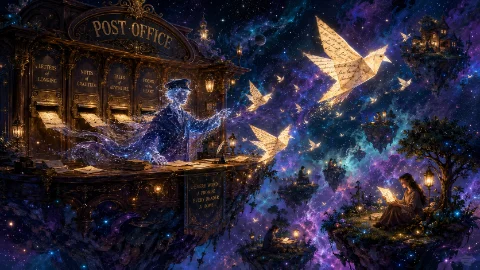
For years, the standard playbook for independent authors was straightforward. You spent months crafting a story that explored the grey areas of human nature, paid for professional editing and cover design, and then uploaded the final file to a massive online retailer. You crossed your fingers, ran some ads, and hoped the retailer’s algorithm would deliver your book to the right audience.
That strategy is no longer sustainable.
As algorithmic marketplaces become increasingly crowded and unpredictable, relying on a single storefront is a dangerous game. Retailers can change their royalty structures overnight. They can suspend accounts without warning. Most importantly, they stand between you and your reader, acting as a gatekeeper to the very audience you worked so hard to build.
In 2026, the most significant shift in the indie community is the aggressive move toward direct sales. Authors are taking the final step toward true independence by building their own digital storefronts.
The Problem with Renting Your Audience
When a reader buys your book from a major retailer, they are not your customer. They are the retailer's customer. The platform keeps the reader's email address, their purchasing history, and their reading preferences. You receive a royalty check and a single data point on a dashboard.
If that retailer decides to alter how books are recommended, your sales can vanish in an instant. You have no way to contact the people who loved your last novel to tell them about your new release. You are constantly forced to acquire new readers instead of nurturing the ones you already have.
Writing stories that challenge the mainstream mold requires a dedicated readership. You cannot afford to lose connection with the people who appreciate your complex narratives.
The Power of the Direct Storefront
Selling direct completely rewrites the author business model. By using platforms like Shopify, WooCommerce, or specialized author-centric tools, you create a dedicated storefront that you entirely control.
The benefits are immediate and profound. First, you retain a significantly higher percentage of your royalties. Without a massive retailer taking a thirty to seventy percent cut, your profit margin on every digital and physical sale increases drastically.
Second, you own the customer data. When a reader buys a book directly from your site, you capture their email address. You can immediately invite them to join your newsletter or your private creative group. You can build intentional, peer-to-peer relationships that last for an entire career, rather than a single transaction.
Building the Independent Ecosystem
Transitioning to direct sales does not mean you have to abandon major retailers completely. Many successful indie authors use those platforms as discovery engines. They list their books widely to catch new readers but funnel their most dedicated fans back to their own websites for exclusive content, special editions, or bundled series.
This approach requires building a broader ecosystem. It means curating your own newsletter, participating in alternative discovery platforms, and perhaps managing a community space on LinkedIn or a private forum. It means treating your writing career as a genuine small business where you are the sole proprietor.
A Commitment to the Craft
Selling direct is a philosophical choice as much as a financial one. It is a declaration that your work has value independent of a corporate algorithm.
When you take the time to build stories with real depth and lasting resonance, you owe it to yourself to protect that work. By reclaiming your income and owning your audience, you ensure that your stories will always have a clear, uninterrupted path to the readers who need them most.