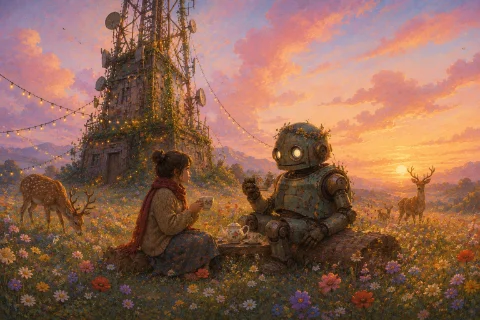
For decades, post-apocalyptic fiction has meant grim survival, cannibal raiders and grey skies. Post-apocalyptic cozy takes the same setting and does something almost rebellious with it. The disaster has already happened. The old world is gone. But the story that follows is not about violence or despair. It is about the tea someone brews from foraged herbs, the neighbours rebuilding a library, the robot learning to garden. The genre trades adrenaline for atmosphere and asks what a good life might look like after everything familiar has ended.
What Makes Post-Apocalyptic Cozy Different
Becky Chambers' Monk and Robot novellas are the genre's shining example: a tea monk and a curious robot travel a healed post-industrial world having gentle conversations about meaning. Station Eleven by Emily St. John Mandel sits at the more literary end, following a travelling theatre troupe across a quieter, sadder world. TJ Klune's warmer speculative fiction occupies similar emotional ground.
Three qualities define the genre. First, low stakes at the plot level. Nobody is trying to save the world; the world has already ended. Second, high stakes at the emotional level, where kindness, community and small acts of care matter enormously. Third, a setting that has moved past collapse into something quieter, whether that is a healed wilderness, a modest town or a solar-powered village. The apocalypse is history, not headline.
Why Readers Love It
The genre offers something increasingly precious: comfort without denial. It does not pretend the world is fine. It imagines that people, faced with the worst, might still choose gentleness. For readers exhausted by grim news and grim fiction, that is genuinely restorative.
There is also the pleasure of slowness. These books linger over meals, seasons and conversations. Plot happens, but so do afternoons. Reading one feels like exhaling.
Where to Start
Becky Chambers' A Psalm for the Wild-Built is the classic gateway, short and beautifully written. From there, Station Eleven offers a more literary experience, and TJ Klune's work brings similar warmth in adjacent genres. Then explore indie territory, where post-apocalyptic cozy is quietly thriving. Independent authors are writing some of the tenderest, most inventive versions of the genre, often mixing it with cottagecore, cozy fantasy and quiet science fiction.