
While a conflict of interest, be it in life or in fiction, can bring about self-introspection, strange though it may seem, a casual encounter could lead to self-discovery. So it happened with me in the wake of my rebuff to a dogged tempter, “money is not my weakness” and his “what is your weakness” repartee; for the record, either I had been a straight purchase officer or a strict loss assessor, occupations amenable to monetary mischief.
However, the idea of this article is not to gloat over my uprightness but to present the genesis of my attitude to money and the vicissitudes of my life as a subject matter for possible research. But the caveat is that much of my growing up that shaped the same was in the times when the social pulls and the peer pressures, not to speak of the student stress, weren’t, as they have come to become of late, as emotionally unsettling. It was primarily because, as compared to the times now, in the days of yore, life tended to furrow in the tracks of karma siddhanta’s poorva janma sukrutam; the happy circumstances of one’s current life are the outcomes of the previous versions’ noble deeds. Besides keeping envy out of life’s framework for the equanimity of the haves and the have-nots alike, this karmic concept boded well for the collective social conduct buttressed by the individual hope of a bettered future life, never mind the bitter one on hand. But lest the laid back attitude should breed in societal lethargy, the dharmic work culture for a pragmatic life was formulated in v 47, ch2, Bhagvad-Gita: Treatise of Self-help, thus: “Hold as patent on thy work / Reckon thou not on royalty / With no way to ceasing work / Never mind outcome but go on.”
Given my birth in August 1948, so to say, I was conceived under the flying Tiranga and lived the first decade of my life in Kothalanka, a remote village in the picturesque Konaseema of the agrarian Andhra Pradesh. There my paternal grandfather Thimmaiah happened to hold a ten-acre paddy field and a five-acre coconut grove and as was the wont of the landed gentry in that era, he leased out all of that. It was in that rural setting, in those leisurely times, as the eldest of the third generation in a frugal household, that I have had a carefree childhood. But, when I turned ten, my father Peraiah, a remarkable man whom I sketched as A Character of Sorts in Glaring Shadow, my stream of consciousness novel, had shifted base to Amalapuram, a nearby small town, apparently for bettering my education.
And better it did for me. In the first academic year itself, I could make myself eligible for the merit-cum-means scholarship that though I chose to forego offhand and did not think much of it either to inform even my mother Kamakshi about it. But, having come to know of my ‘foolhardy act’ from my class fellows, when my grandfather questioned my strange conduct, I reminded him that it was he who told me that we are well-heeled, and he had no more to say. But, it was much later, and long after he disposed off that family silver and mismanaged its proceeds, that I realized my little eleven-year old rustic head could have instinctively figured out that our then family means made me peremptorily ineligible for the scholarship on that count. However, despite the latter-day material modesty, my attitude to money stayed course with my life and times as my youthful grasp of the ethereal value of woman’s effervescent love made the moolah inconsequential to my being as well as immaterial to my belonging, thereby ensuring that I remained immune to its lures that is notwithstanding the truism in the adage that ‘love is no more than a hackneyed expression unless backed by money’.
It’s thus, Napoleon Bonaparte’s “the surest way to remain poor is to be honest,” has been fine with me, and thankfully, with my spouse Naagamani as well. Nevertheless, the inexplicable period of penury that followed my cold shouldering a one crore bribe made me wonder whether goddess Lakshmi, feeling slighted at long last, thought it fit to punish me, the audacious errant. But, having subjected us to a four-year financial ordeal, as if to validate the Sanatana dharma’s credo, dharmo rakshati rakshita (righteousness protects the righteous persons); the goddess had finally relented by putting our life back on its modest track, so it seemed.
However, as it appears, maybe, Suresh Prabhu of my Jewel-less Crown: Saga of Life, has unraveled the ramifications of the moolah in its Spirituality of Materialism thus: “It’s the character of money to corrupt the ardent, tease the vacillating and curse the indifferent. That way, there seems to be no escape for man from money. You’re damned if you have it and accursed for the lack of it”. What is more, by way of showing an escape route to his bride Vidya, he cautioned her; “make money the measure and you are in for trouble dear”; it is as if he has alerted all of us to its pitfalls so that we can collectively regulate our monetary heads to make the best use of our life within our mundane means.
On Attitude to Money
“It’s the character of money to corrupt the ardent, tease the vacillating and curse the indifferent. That way, there seems to be no escape for man from money. You’re damned if you have it and accursed for the lack of it”. What is more, by way of showing an escape route to his bride Vidya, he cautioned her; “make money the measure and you are in for trouble dear.”
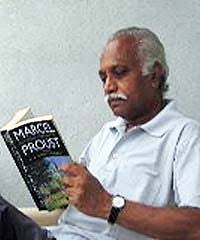

Written by
BS Murthy
I’m an Indian novelist, playwright, short story, non-fiction ‘n articles writer, translator, a ‘little’ thinker and a budding philosopher in ‘Addendum to Evolution: Origins of the World by Eastern Speculative Philosophy’ that was originally published in The Examined Life On-Line Philosophy Journal, Vol. 05 Issue 18, Summer 2004.
Born on 27 Aug 1948 and schooled in letter-writing, I’ve articulated my managerial ideas in thirty-odd published articles, and later penned Benign Flame: Saga of Love, Jewel-less Crown: Saga of Life, Crossing the Mirage: Passing through youth (plot and character driven novels), Glaring Shadow: A stream of consciousness novel, Prey on the Prowl: A Crime Novel, Of No Avail: Web of wedlock, a novella, Stories Varied: A Book of Short Stories, and Onto the Stage: Slighted Souls and other stage and radio plays.
Then entering the arena of non-fiction with a ‘novel’ narrative of Puppets of Faith: Theory of Communal Strife (A critical appraisal of Islamic faith, Indian polity ‘n more) possibly a new genre, I ventured into the translation zone for versifying the Sanskrit epics, Vyasa’s Bhagvad-Gita (as Treatise of self-help), Valmiki’s Sundara Kãnda (as Hanuman’s Odyssey) in contemporary English idiom, and a critique Inane Interpolations in Bhagvad-Gita (An Invocation for Their Revocation).
And in the end, as a prodigal son, I returned to my mother tongue, Telugu, to craft the short story తప్పటడుగులు (Missteps).
Whereas my fiction had emanated from my conviction that for it to impact readers, it should be the soulful rendering of characters rooted in their native soil but not the hotchpotch of local and alien caricatures sketched on a hybrid canvas, all my body of work was borne out of my passion for writing, matched only by my love for language.
My body of work as above is in the public domain as free ebooks https://g.co/kgs/bGUEqt
Besides, some of my published articles on management issues, general insurance topics, literary matters, and political affairs in The Hindu, The Economic Times, The Financial Express, The Purchase, The Insurance Times, Triveni, Boloji.com are at Academia.edu https://independent.academia.edu/BulusuSMurthy
I, a graduate mechanical engineer from Birla Institute of Technology, Mesra, Ranchi, India, had been a Hyderabad-based Insurance Surveyor and Loss Assessor for over thirty years.
I take keen interest in politics of the day, have an ear for Carnatic and Hindustani classical music and had been a passionate Bridge player.
I’m married, to a housewife, with two sons, the elder one a PhD in Finance, and the younger a Master in Engineering.