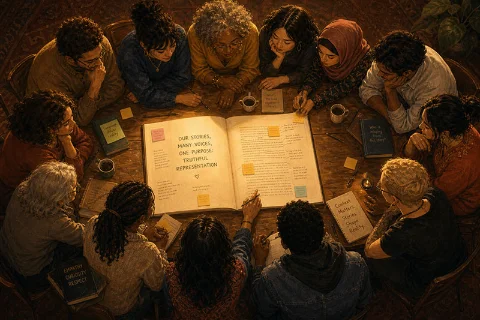
Metafiction walks a fine line. It can feel brilliant and intimate, like the story is winking at you and inviting you into its secrets. Or it can feel forced and distancing, like the writer is showing off instead of telling a story.
This tension is what I call metafiction’s double blade. One edge sharpens the reading experience by reminding us that we are engaging with something made by human hands. The other edge can slice straight through immersion if it is not handled with care and purpose.
When it works, metafiction creates stories that feel alive and self-aware. They do not just entertain. They make us think about how stories themselves are built and why they matter.
What Exactly Is Metafiction?
Metafiction is any fiction that draws attention to its own artificial nature. The narrator might speak directly to you, the reader. Characters might realize they are inside a book. The story might include footnotes that contradict the main text, or an author who steps into their own novel.
It is not just breaking the fourth wall for a joke. True metafiction uses that awareness to explore bigger ideas about truth, memory, creativity, and the relationship between storyteller and audience.
Why Writers Use This Technique
In a world full of predictable plots, metafiction offers something fresh. It turns readers into active participants. Instead of simply watching events unfold, readers start noticing how the story is being shaped.
This approach works especially well for literary and experimental fiction, but it can appear in many genres when done thoughtfully. It rewards rereading and sparks conversation in reading communities like this one.
Effective Techniques Writers Can Try
Here are some proven approaches that keep the blade sharp rather than dull:
- Direct address to the reader — Speak to “you” as if the book knows it is being read right now.
- Stories within stories — Nest one narrative inside another so readers question which layer is “real.”
- Author intrusion or self-insertion — Let a version of the writer appear or comment on the choices being made.
- Experimental form — Use footnotes, unusual layouts, changing typography, or blank pages that comment on the content.
- Self-reflective characters — Let characters question their own existence, free will, or the rules of the world they inhabit.
The key is always the same: every metafictional moment should serve the emotional heart of the story.
Strong Examples Worth Studying
Some of the best metafiction shows how powerful this technique can be when balanced well.
Italo Calvino’s If on a Winter’s Night a Traveler opens by speaking directly to you as the reader who is about to begin the novel. It then keeps interrupting with new beginnings, turning the act of reading into part of the story itself.
Mark Z. Danielewski’s House of Leaves uses wildly experimental formatting, endless footnotes, and multiple unreliable narrators. The physical book itself becomes part of the haunting.
Kurt Vonnegut often stepped into his own stories (most famously in Slaughterhouse-Five and Breakfast of Champions) with short, direct asides that blend humor, grief, and commentary on writing itself.
John Fowles’ The French Lieutenant’s Woman tells a Victorian love story while a modern narrator frequently interrupts to discuss the conventions of 19th-century fiction and the choices the author is making.
These books succeed because the metafictional elements are not just clever. They deepen the themes of truth, identity, and storytelling.
The Risks and How to Avoid Them
The biggest danger is cleverness without heart. If readers feel like they are being lectured or shown a magic trick instead of living inside a story, they will disengage.
Other common pitfalls include:
- Using metafiction too often or too early, before readers are invested in the characters.
- Making it feel random instead of connected to the story’s deeper meaning.
- Sacrificing emotional truth for structural playfulness.
To stay safe, always ask yourself: Does this moment make the story feel more human, or less?
Practical Tips for Your Own Writing
Start small. Try metafictional touches in a short story before committing to a full novel.
Read widely in the form. The more examples you absorb, the more naturally the techniques will come to you.
Tie every self-aware moment to character or theme. If a character questions whether they are real, make sure that doubt connects to their central struggle.
Test it with readers. Share a section with trusted beta readers and ask specifically whether the metafictional elements pulled them in or pushed them away.
Know when to hold back. Sometimes the most powerful metafictional move is a single quiet line rather than constant reminders.
The Reward When It Works
Done well, metafiction creates a special kind of intimacy. It says to the reader, “We both know this is a story, and yet here we are, feeling something real together.”
That shared awareness can make a book unforgettable. It invites deeper conversations in book clubs and writing communities.
Metafiction’s double blade is sharp, but when you learn to wield it with intention and heart, it becomes one of the most rewarding tools in your writing kit.
Have you ever read a book that felt like it was winking at you? What metafictional stories have stayed with you? Share your favorites in the comments. I would love to hear which ones have inspired your own writing.