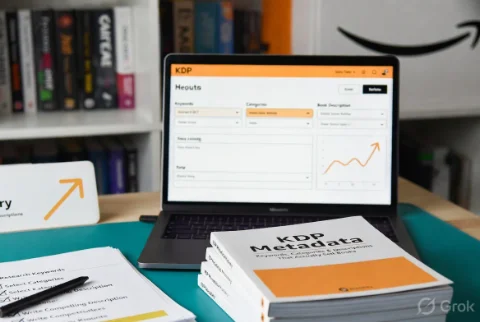
If you have ever published a book on Amazon and wondered why it is not showing up in searches, the answer is often sitting right in front of you in your KDP dashboard.
Most indie authors focus heavily on writing and cover design. Those things matter a lot. But your KDP metadata (the keywords, categories, and book description) is what tells Amazon what your book is about and who should see it.
When these three pieces are done well, your book has a much better chance of being discovered by the right readers. When they are ignored or done poorly, even a great story can stay hidden.
In this guide we will break down exactly how to master KDP metadata in 2026 so your books get found and actually sell.
What Is KDP Metadata and Why It Matters
KDP metadata is the information you provide when you publish or edit your book. It includes:
- Backend keywords (the 7 slots)
- Categories
- Book description
- Title and subtitle
Amazon uses this information to decide where to show your book in search results and recommendations. It also helps the algorithm understand whether your book matches what readers are looking for.
In 2026, Amazon continues to reward books that perform well. Good metadata helps get your book in front of people who are likely to buy it. Strong sales then tell Amazon to show it to even more people.
1. Keywords: The Foundation of Discoverability
We covered keyword research in depth in our earlier guide, but here is the short version for metadata.
You have seven backend keyword slots. Use them wisely.
Best approach right now:
- Focus on specific, reader-friendly phrases rather than single words
- Include subgenre, tropes, setting, character types, and tone
- Avoid repeating words that are already in your title or subtitle
- Think about what someone would actually type when searching for a book like yours
Example for a small-town cozy mystery:
- cozy mystery small town
- amateur sleuth cat mystery
- feel good mystery with recipes
- books like Agatha Raisin
These longer phrases help Amazon match your book to very specific searches.
2. Categories: Where Readers Actually Browse
Categories are more important than many authors realize. They determine which bestseller lists your book can appear on and help Amazon show your book in the right sections.
You can choose two main categories when you publish. You can also request additional categories later through KDP support.
How to choose strong categories:
- Look at where similar successful books in your genre are categorized
- Pick the most specific categories where you have a realistic chance of ranking
- Avoid super broad categories where thousands of books are competing
- Update categories if your book starts performing better in a different area
A well-chosen category can put your book in front of readers who are actively browsing that section.
3. Book Description: Your 24/7 Sales Copy
Your book description is often the deciding factor between someone clicking away or hitting “Buy now.”
It needs to do two jobs:
- Help with Amazon search (include natural keywords)
- Convince readers to buy
What works well in 2026:
- Start with a strong, emotional hook in the first 1-2 lines
- Keep paragraphs short and easy to read on mobile
- Use line breaks and simple formatting for scannability
- Include key tropes or themes naturally (without stuffing)
- End with a gentle call to action
Many successful indie authors also add a short “About the Author” section at the bottom of the description. It builds trust and can improve conversions.
Write the description like you are recommending the book to a friend who loves this genre. Warm and genuine almost always converts better than overly salesy language.
How Keywords, Categories, and Descriptions Work Together
These three elements are not separate tasks. They support each other.
Good keywords help Amazon understand what your book is about. Strong categories place it in the right browsing areas. A compelling description turns that visibility into actual sales.
When all three are aligned, you create a clear signal to Amazon about who should see your book. This leads to better placement in search and recommendations, which leads to more sales.
Common KDP Metadata Mistakes to Avoid
- Using the same keywords across all seven slots
- Choosing categories that are too broad or too competitive for a new release
- Writing a long, dense block of text for the description
- Ignoring the description after the initial publish
- Keyword stuffing instead of using natural reader language
The authors who see the best results treat metadata as an ongoing part of their publishing process rather than a one-time task.
Quick KDP Metadata Optimization Checklist
Use this checklist the next time you publish or update a book:
- Run proper keyword research for your specific book
- Fill all seven backend keyword slots with relevant phrases
- Choose the two most strategic categories
- Write a compelling, easy-to-read description with a strong hook
- Make sure your title and subtitle work well with your keywords
- Preview how everything looks on mobile
- Plan to review and update metadata after 30-60 days based on performance
Small improvements in these areas often lead to noticeable lifts in visibility and sales.
KDP metadata is one of the highest-leverage things you can work on as an indie author. It does not require a big budget or fancy tools. It just requires understanding what Amazon needs to know about your book and giving it that information clearly.
When your keywords, categories, and description are all working together, your book has a much better chance of reaching the readers who will love it.
You have already done the hardest part by writing the book. Now give it the best possible chance to succeed by mastering the metadata that represents it on Amazon.
Which part of KDP metadata are you focusing on right now? Keywords, categories, or your book description? Drop a comment below and share what you are working on. The Indie Reading Community is here to support each other through every step of the self-publishing journey.
Keep writing and keep optimizing. Your readers are waiting.