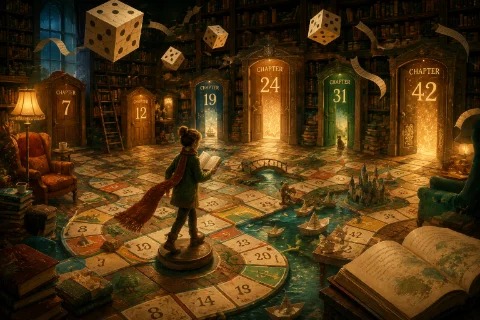
Every novel asks you to watch. Interactive fiction asks you to act. In this genre, the reader makes decisions that change the course of the story, whether that means turning to page 47, typing a command into a text parser, or tapping a choice on a screen. The author builds the maze, but you walk it, and no two readers walk it quite the same way.
What Counts as Interactive Fiction
The genre is broader than most people realise. It includes the classic choose your own adventure books that many of us grew up on, the text adventure games of the 1980s like Zork, and the modern renaissance of choice-based novels, story apps and browser-based works built with tools like Twine. Some interactive fiction leans towards gaming, with puzzles and inventories. Some is pure literature that simply happens to branch, exploring how a single decision can send a life down an entirely different road.
What unites all of it is agency. The story does not exist in a fixed form until you read it. Your choices are not decoration; they are the mechanism that assembles the narrative.
Why Readers Love It
Interactive fiction creates a kind of investment no linear book can match. When a character suffers because of a choice you made, the guilt is yours. When a risky decision pays off, so is the triumph. That personal stake makes these stories linger.
There is also the replay factor. A branching novel is really several novels sharing one cover, and discovering the paths you did not take is half the pleasure. Readers often return three or four times, chasing endings, and each pass reveals how carefully the whole structure was built.
For writers, meanwhile, it is one of the most demanding crafts in fiction, which means the good examples are very good indeed.
Where to Start
If you want a gentle entry, try modern choice-based novels or story apps, which need nothing but curiosity. If you enjoy puzzles, classic and contemporary text adventures offer a deeper challenge. And keep an eye on indie creators, because interactive fiction is overwhelmingly an indie art form, built by independent authors experimenting far beyond what mainstream publishing attempts.