Why Climate Collapse Fiction Needs Careful Research
Climate collapse or eco fiction lives and dies on believability. Readers do not expect you to be a climate scientist. They do expect your world to feel grounded, coherent, and emotionally true.
Because the breakdown in these stories is slow and systemic rather than a single explosion, research becomes a way to map out how the world actually falls apart. From infrastructure to migration to daily life, each choice you make should connect back to something plausible.
Step 1: Defining My Core Hook and Positioning
Before I touch any sources, I clarify my core hook:
Is this a near future, realistic, high tension world?
Is the tone emotionally intense but still plausible?
Am I combining practical survival challenges with moral and social dilemmas?
For a climate collapse project, my positioning usually sits at the intersection of:
A familiar world only a few decades away.
Social commentary about inequality, governance, or corporate power.
Survival and relationships under escalating environmental stress.
Once I know this, I can filter my research so I do not drown in information that does not serve the story.
Step 2: Choosing Research Sources (Science, Society, Lived Experience)
I divide my research into three broad categories:
Scientific and journalistic sources
Articles on climate projections, sea level rise, drought patterns, and extreme weather.
Reports on infrastructure vulnerability, supply chains, and food or water security.
Social and political context
Pieces about climate refugees, resource conflicts, and environmental policy.
Case studies of real disasters and how communities responded.
Lived experience and narrative work
Memoirs, interviews, and documentaries from people affected by floods, fires, or droughts.
Fictional climate novels that show how others have handled similar themes.
My goal is not to copy any one source but to absorb patterns: which systems fail first, who gets hit hardest, and how people adapt or resist.
Step 3: Turning Research into Story Decisions
Raw research does not automatically become story. I run every fact through three questions:
How does this change daily life for my characters?
What does this do to power, money, and safety?
How can this create a moral dilemma, not just a disaster scene?
For example, if I learn about sea level rise projections, I do not just write “the city flooded.” I decide:
Which neighborhoods are now permanently underwater?
Who gets access to elevated, protected zones and who does not?
What new informal economies emerge on the water?
These decisions give me specific images, conflicts, and plot hooks rather than a generic “the world is ending” backdrop.
Step 4: Mapping Slow Breakdown Instead of One Big Bang
Climate collapse fiction works best when the reader can see the slow unraveling. To do this, I sketch a basic timeline:
Early warning signs that most people ignore or downplay.
First visible disruptions: unreliable power, price spikes, migration news.
Cascading failures: infrastructure damage, food or water shortages, political unrest.
The new normal: a world where collapse is not an event but a daily condition.
Every major event in the plot ties back to where we are on this timeline. This keeps the story grounded and lets me show how systems fail long before they physically break.
Step 5: Aligning Story Decisions with Searcher Intent
While I am building the world, I also think about how readers will search for it. Climate and eco fiction readers usually come in with three core intents:
Discovery: “What should I read next?”
Information: “What is climate fiction?” or “What is cli fi?”
Comparison: “Books like [well known author or title].”
I translate my decisions into language that fits those intents. For example:
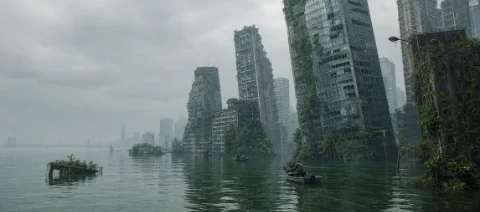
If my story features a drowned coastal city, I know it aligns with sea level rise fiction or flooded city climate novels.
If my theme is climate refugees, I can frame content around climate refugee fiction and environmental collapse stories.
This informs both my eventual book description and the blog posts I plan around it.
Step 6: Building Keyword Clusters Around My Research
To support the book and my author platform, I design content around keyword clusters that match my research focus. Think of each cluster as a mini research driven content silo.
Cluster 1: Definition and Overview
These keywords support educational, foundational posts:
climate fiction books
climate change novels
eco fiction book list
what is climate fiction
cli fi meaning / cli fi genre
I use these to write clear, approachable guides that explain the genre, its history, and its sub tropes. Here I can reference some of the broader sources that shaped my understanding.
Cluster 2: Reader Discovery and Recommendations
These help readers find what to read next:
best climate change novels
best eco dystopian books
post apocalyptic climate fiction
books like Oryx and Crake
near future climate sci fi
In these posts, I draw on both my research reading list and my personal taste. I mention how each book handles worldbuilding, science, and emotional stakes, then gently position my own work within the same ecosystem.
Cluster 3: Thematic and Trope Based Searches
Here I narrow down to specific scenarios that echo my research:
sea level rise fiction
drought apocalypse novel
environmental collapse stories
climate refugee fiction
pandemic and climate change novels
Each of these can anchor a focused blog post, where I talk about how stories (including mine) imagine these situations based on current science and social dynamics.
Cluster 4: Writer and Craft Focused Queries
Because I write for other authors as well, I turn my research decisions into craft content:
how to write climate fiction
climate fiction worldbuilding tips
eco dystopian story ideas
near future sci fi plotting
environmental themes in fiction
These posts let me explain my process directly: which sources I trust, how I translate data into scenes, and how I avoid both preachiness and shallow spectacle.
Step 7: Showing My Work Without Overwhelming the Reader
In the finished story, I do not dump research on the page. Instead, I show it through:
Specific details: water ration cards, mold in high rise walls, flooded transit tunnels.
Concrete consequences: migration checkpoints, food riots, privatized security.
Character choices: whether to stay or flee, cooperate or exploit, adapt or deny.
On my blog, however, I can peel back the curtain. I might write posts like:
“How Real Sea Level Rise Data Shaped My Drowned City Setting”
“Three Real Climate Policies That Inspired the Regime in My Novel”
“From Research to Scene: Turning Infrastructure Reports into Story Tension”
These pieces explicitly share my sources and decisions in a way that both informs and markets.
Step 8: Connecting Research, Story, and Platform
In the end, my climate collapse research serves three interconnected goals:
Story integrity: A world that feels lived in, coherent, and emotionally resonant.
Reader trust: An audience that senses I took the theme seriously, even in a fictional context.
Platform growth: Evergreen content built on keyword clusters that brings in readers and writers interested in climate fiction.
By being transparent about my process, the sources I considered, and the choices I made, I invite readers into the creative journey and position myself as an author who treats climate collapse fiction with respect, not as a disposable trend.