Some of the most enduring novels ever written were not told through a narrator's voice or a character's direct perspective. They were assembled from letters, diary entries, newspaper clippings, court transcripts, and personal documents. This form of storytelling has a name: epistolary fiction. And far from being a historical curiosity, it is alive and working in contemporary literature in ways that feel entirely fresh.
If you have ever thought about writing a novel that uses documents as its primary storytelling vehicle, this guide covers what you need to know: where the form comes from, what makes it work, the specific craft challenges it creates, and how to avoid the mistakes that sink most attempts at it.
What Is Epistolary Fiction
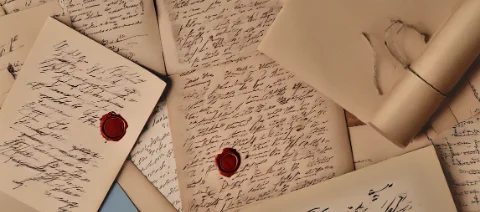
The word epistolary comes from the Latin epistola, meaning letter. In its original sense, an epistolary novel is one told entirely through letters exchanged between characters. Over time the definition has expanded to include any novel that is told through documents rather than through conventional narration.
Those documents can include personal letters, diary and journal entries, emails and text messages, social media posts, newspaper articles, medical records, legal transcripts, police reports, blog posts, voicemail transcriptions, and any other written record a character might plausibly have created or received.
What all of these forms share is the absence of a traditional narrator. In epistolary fiction, the reader assembles the story from primary documents the way a historian or investigator might. The author's hand is hidden behind the documents themselves.
A Brief History of the Form
Epistolary fiction is one of the oldest forms of the novel. Some literary historians argue it is where the English novel effectively began.
Samuel Richardson's Pamela, published in 1740, told the story of a young servant girl through her letters home to her parents. It was a sensation. Richardson followed it with Clarissa in 1748, another epistolary novel and one of the longest in the English language. These books established many of the conventions readers still associate with the form: intimate access to a character's private thoughts, the unreliable narrator problem inherent in personal correspondence, and the dramatic tension that comes from what characters choose not to say.
Bram Stoker's Dracula, published in 1897, remains one of the most well-known examples of the multi-document approach. The novel is assembled from journal entries, letters, newspaper clippings, and a ship's log. No single narrator tells the story. Instead, the reader pieces it together from multiple perspectives, each limited by what that individual character knows and observes.
The form largely fell out of fashion in the twentieth century as literary modernism pushed toward interior monologue and stream of consciousness. But it never disappeared, and it has seen a significant revival in contemporary fiction. Novels like The Color Purple by Alice Walker, We Need to Talk About Kevin by Lionel Shriver, Where'd You Go Bernadette by Maria Semple, and Flowers for Algernon by Daniel Keyes are all epistolary or heavily document-driven, and they are all widely read and taught.
The rise of digital communication has given the form new energy. Email, text messages, and social media are forms of correspondence that contemporary readers understand intuitively, and novelists have begun using them in ways that feel native to the current moment.
Why Writers Choose the Epistolary Form
Before deciding to write an epistolary novel, it is worth understanding what the form offers and whether those advantages serve the story you want to tell.
Intimacy: A letter or diary entry gives readers access to a character's private voice in a way that feels different from third-person narration. The character is not being observed. They are speaking directly, often to someone they trust, and that creates a particular kind of closeness.
Unreliability built into the structure: Every document in an epistolary novel is written by someone with a perspective, a motive, and a limited view of events. The form makes unreliable narration feel natural rather than gimmicky. When a character writes a letter describing an argument, the reader automatically understands that this is one side of the story.
Multiple perspectives without omniscience: By using documents from different characters, an epistolary novel can show the same events from multiple points of view without resorting to an omniscient narrator. Each document is limited and partial. The full picture only emerges when the reader puts them together.
Dramatic irony at a structural level: Because each character only knows what they know, the reader often ends up knowing more than any individual character does. That gap is a natural source of tension and irony.
A sense of authenticity: Documents feel real in a way that narration does not. A forged letter, a torn diary page, a redacted report, a series of text messages that end abruptly. These objects carry weight. Readers respond to them as evidence.
The Core Craft Challenges
The advantages of epistolary fiction come with specific challenges that writers need to think through carefully before committing to the form.
Exposition Without a Narrator
In conventional fiction, a narrator can describe setting, provide context, explain backstory, and orient the reader. In epistolary fiction, all of that has to be accomplished through the documents themselves, and it has to feel natural rather than forced.
A character writing a diary entry does not explain their city to themselves. A person sending an email to a close friend does not describe what the friend already knows. If your documents feel like they are delivering exposition for the reader's benefit rather than communication for a character's purpose, the form will feel artificial.
The solution is to think carefully about who each document is addressed to and why. A letter to a stranger can naturally include context that a letter to a spouse cannot. A diary written during a period of crisis will include details that a diary written during a quiet week will not. Match the content of each document to its real-world communicative purpose and the exposition problem largely solves itself.
Conveying Action
Epistolary fiction is inherently retrospective. A letter describing an event was written after the event happened. A diary entry records the day after the fact. This creates a natural distance between the reader and the action that conventional fiction does not have.
There are several ways to manage this. One is to use documents that are written in close to real time, text messages sent during an unfolding situation, a live blog, a journal entry written the same evening as the events. Another is to lean into the retrospective quality deliberately, using the distance between event and document as part of the story's meaning. A character who writes about a terrible event weeks later, still processing it, tells the reader something different from a character who writes about it the same night.
What does not work is ignoring the problem. If your documents read like scenes in conventional narration, just formatted as letters, you have not fully committed to the form. The retrospective quality of epistolary narration is not a bug. It is part of what the form does, and writers who embrace it tend to produce stronger work than those who try to write around it.
Voice Differentiation
If your novel uses documents from multiple characters, each character's documents need to sound distinctly different. This is harder than it sounds. Writers have a natural voice that bleeds into every character they write unless they work deliberately against it.
Before drafting, spend time with each document-writing character. Understand their education level, their relationship to writing, their emotional habits, and the specific person or audience they are addressing. A teenager's text messages should not sound like a retired academic's journal entries. A formal legal document should not read like a personal letter. The differences should be audible to the reader without being labored.
Reading the documents of different characters in sequence, without context, is a useful test. If you cannot tell which character wrote which document, the voices are not differentiated enough.
The Editor or Compiler Problem
Many epistolary novels include a framing device: a fictional editor or compiler who has assembled the documents the reader is about to read. Dracula uses this implicitly. Other novels make it explicit, with a foreword or afterword from the compiler explaining how the documents were gathered and why.
This framing device can solve some practical problems. It explains why these particular documents exist and how they came together. It can provide context the documents themselves cannot supply. And it can create an additional layer of unreliability: is the compiler trustworthy? What did they leave out?
The risk is that the framing device distances the reader from the documents themselves. If the compiler's voice is too prominent, the novel starts to feel like a conventional narrated story with documents attached rather than a true epistolary form. Use the framing device when it genuinely serves the story, but do not let it substitute for the hard work of making the documents themselves carry the narrative.
Structural Considerations
Epistolary novels require a different approach to structure than conventional fiction. The documents themselves are the structure, which means every decision about which documents to include, in what order, and from whose perspective shapes the reader's experience in ways that are different from scene and chapter decisions.
Chronology versus assembly order: Documents do not have to be presented in the order they were written. A novel might open with a document from the end of the story and then work backward. The gap between when a document was written and when it appears in the novel is a structural tool. Use it.
What is withheld: In epistolary fiction, what the reader does not see is as important as what they do see. The missing letter, the journal entry that was torn out, the email thread that skips a critical day. Gaps in the documentary record create suspense and invite the reader to speculate about what happened in the spaces between documents.
The problem of the climax: Epistolary fiction struggles with climactic scenes for the same reason it struggles with action: the form is retrospective. A writer cannot put the reader inside the climactic moment in real time the way conventional narration can. The most common solutions are to use a document written very close to the moment of crisis, to follow the climax with a document that conveys the immediate emotional aftermath in ways that feel raw rather than processed, or to leave a gap at the climax and let the reader understand what happened from the documents that follow.
Types of Documents and What Each Does Best
Different document types carry different narrative strengths, and mixing them strategically gives an epistolary novel range.
Personal letters are best for intimacy, voice, and the relationship between writer and recipient. They show what a character chooses to share, which is as revealing as what they say directly.
Diary and journal entries give access to unfiltered private thought. A diary is not addressed to anyone, which means characters can be more honest in them than in letters, but they can also be self-deceiving in ways that letters are not.
Emails and text messages carry contemporary realism and can convey rapid back-and-forth exchanges that feel close to dialogue. They are also naturally fragmented, which suits stories about miscommunication.
Official documents such as police reports, medical records, court transcripts, and news articles provide an external, apparently objective view of events. The gap between the official account and what the reader knows from private documents is a reliable source of dramatic irony.
Found documents such as old photographs with captions, receipts, lists, or notes create texture and can deliver information that no character would put into a letter or diary because they know it too well to think it worth recording.
Contemporary Epistolary Fiction
The form is more active in contemporary publishing than many writers realize. Several recent novels demonstrate how the epistolary approach can be used in ways that feel original rather than archaic.
The novel format has been extended to include multimedia documents in some experimental works. Novels that incorporate screenshots, images of handwritten notes, and reproductions of documents within the text push the form toward something closer to visual storytelling.
Genre fiction has embraced the form enthusiastically. Epistolary horror, where the dread builds through what documents imply rather than show, has a long tradition running from Dracula through to contemporary works. Mystery and thriller writers use the documentary format to manage information and plant clues. Romance writers have used it to tell love stories through correspondence that spans years.
Young adult fiction has also made effective use of the form, particularly through the use of journals and contemporary digital communication. The diary novel is a stable presence in YA publishing because the form suits the interiority and self-examination that young readers often find compelling.
Is Epistolary Fiction Right for Your Story
Not every story is suited to the epistolary form. Before committing, it is worth asking a few honest questions.
Do the events of your story lend themselves to being recorded in documents? Some stories rely heavily on physical action, visual spectacle, or real-time tension that the retrospective quality of epistolary narration handles awkwardly.
Is the act of writing and communication central to your story's meaning? Epistolary fiction works best when the form itself carries thematic weight. A story about distance and connection, about what we reveal and conceal, about the gap between private experience and public account. When the documentary form reinforces what the story is about, the form and content work together. When it is just a stylistic choice applied to a story that could be told any other way, the form often creates more problems than it solves.
Do you have a compelling reason why these documents exist and have been preserved? The plausibility of the documentary record matters. If the reader is expected to believe that a character texted detailed descriptions of their emotional state during a crisis, that credulity needs to be earned.
If your answers to those questions are yes, epistolary fiction may be exactly the right form for your novel. The structure it imposes is a constraint, but constraints in fiction often produce more interesting work than complete freedom. The limitations of the form, what it cannot show, what it must leave out, what it can only imply, are frequently what give epistolary novels their particular power.
Getting Started
If you want to try the epistolary form, begin with a simple exercise. Choose two characters who have a reason to be in correspondence. Give each of them something they want from the other that they cannot ask for directly. Write three exchanges of letters or messages between them.
Pay attention to what each character chooses to say and what they choose not to. Notice what has to be implied rather than stated. Watch how the gap between what one character writes and what the other understands creates its own kind of tension.
That gap is the engine of epistolary fiction. If you find it interesting to work with, the form may suit you. If you find yourself wanting to step outside the documents and tell the reader what is really happening, that is a signal worth taking seriously too.
The epistolary form has been producing powerful fiction for nearly three centuries. It is not a gimmick or a novelty. It is a distinct way of telling stories, with its own strengths, its own limitations, and its own particular relationship with the reader. Used with intention, it can do things that no other narrative form can.