For indie authors, getting one book sale is good.
Getting a reader who comes back for the next book is better.
That is where email marketing becomes powerful.
Many authors think of email as a launch tool. They build a list, send a message when a book comes out, and hope people buy. But email marketing can do much more than announce new releases.
A good author newsletter can turn curious subscribers into real readers. It can turn first-time readers into fans. It can turn fans into repeat buyers who follow your writing journey, wait for your next release, and recommend your books to others.
This does not happen by accident.
It happens when your emails build trust, create interest, and make readers feel connected to your books beyond a single purchase.
You do not need to be famous. You do not need a huge list. You do not need to write perfect marketing copy. You need a simple, human system that helps readers remember you, like you, and return to your work.
Why Email Marketing Matters for Indie Authors
Indie authors often spend a lot of energy trying to be seen.
They post on social media. They join groups. They run promotions. They try ads. They look for reviews. They submit books to websites. They hope the right reader finds them.
All of those things can help, but many of them depend on platforms you do not control.
Your email list is different.
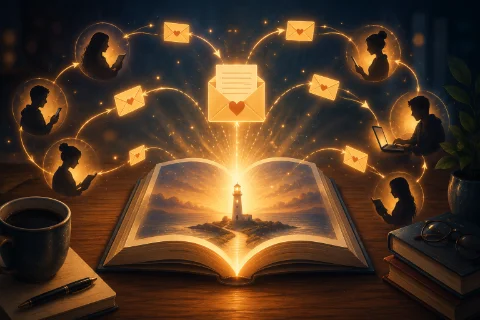
When someone joins your list, they are giving you direct permission to reach them. That is valuable. You are no longer waiting for an algorithm to show your post. You are no longer hoping a reader remembers your name. You have a way to continue the conversation.
That direct connection is one of the most important assets an indie author can build.
An email list can help you:
- announce new books
- promote older books
- share sample chapters
- invite reviews
- grow launch momentum
- build reader loyalty
- sell series books
- increase repeat purchases
- stay visible between releases
The real power is not just in sending emails. It is in staying present in the reader’s mind.
Subscribers Are Not Buyers Yet
One common mistake authors make is assuming a subscriber is already a buyer.
Sometimes they are. Often, they are not.
A subscriber may have joined because they liked your free chapter, downloaded a reader magnet, saw your book listing, followed you from a community, or clicked out of curiosity.
That does not mean they are ready to buy immediately.
Email marketing works best when you understand the journey.
A reader may move through several stages:
First, they notice you.
Then, they become curious.
Then, they subscribe.
Then, they read something small from you.
Then, they start trusting your voice.
Then, they buy one book.
Then, if the experience is good, they buy again.
The goal is not to force a sale too early. The goal is to guide the reader from interest to trust, and from trust to action.
What Makes a Subscriber Become a Loyal Buyer?
A loyal buyer usually comes from three things: interest, trust, and satisfaction.
Interest brings them onto your list.
Trust keeps them opening your emails.
Satisfaction makes them come back after buying.
If your emails are only sales messages, trust becomes weak. If your books do not match what you promised, satisfaction disappears. If your content does not fit your genre or audience, interest fades.
That is why email marketing should feel connected to your author brand.
A thriller author’s newsletter may feel suspenseful, sharp, and fast-moving. A cozy mystery author’s newsletter may feel warm, familiar, and inviting. A nonfiction author’s newsletter may be practical and useful. A fantasy author’s newsletter may include worldbuilding, maps, lore, and behind-the-scenes notes.
The best email marketing does not sound like generic marketing. It sounds like you, speaking to the right readers.
Start with a Clear Reader Promise
Before you send emails regularly, decide what readers will get from being on your list.
This is your reader promise.
It does not have to be complicated. It simply tells people why staying subscribed is worth it.
Your promise might be:
- early news about new books
- exclusive sample chapters
- bonus scenes
- writing updates
- book recommendations
- behind-the-scenes notes
- discounts and launch offers
- reader-only extras
- helpful advice if you write nonfiction
A clear promise makes your newsletter easier to understand.
Instead of saying, “Join my newsletter,” you can say:
“Join my reader list for new release updates, bonus scenes, and early previews.”
That feels more specific. Readers know what they are signing up for.
Build a Welcome Sequence That Creates Trust
Your welcome email is one of the most important emails you will ever send.
When someone subscribes, they are paying attention in that moment. They remember why they joined. They are more likely to open your first message than many future messages.
Do not waste that opportunity.
A good welcome email should:
- thank them for joining
- remind them what they signed up for
- deliver the promised freebie
- introduce you briefly
- tell them what to expect next
- invite a simple reply
Keep it warm and simple.
You do not need a long life story. Readers want to know who you are, what kind of books you write, and why they should stay connected.
A Simple Welcome Sequence for Indie Authors
One welcome email is useful. A short welcome sequence is better.
Here is a simple structure:
Email 1: Welcome and delivery
Thank the reader, deliver the free chapter or bonus, and introduce your writing style.
Email 2: Your author world
Share what kind of books you write, what themes you return to, and what readers can expect from you.
Email 3: Best place to begin
Recommend the best book, sample, or page for a new reader to start with.
Email 4: Social proof or reader connection
Share a short review, reader comment, behind-the-scenes note, or personal story related to the book.
Email 5: Soft invitation to buy
Invite the reader to continue with the full book, series, or related title.
This sequence gently moves a subscriber toward becoming a buyer without making the relationship feel rushed.
Sell Without Sounding Desperate
Many indie authors feel uncomfortable selling through email.
They worry about annoying readers. They worry they will sound too promotional. They worry people will unsubscribe.
The truth is, readers joined your author list because they are interested in your books. It is completely reasonable to tell them when a book is available.
The problem is not selling. The problem is only selling.
A good newsletter balances connection and promotion.
You can sell naturally by framing your book around reader interest.
Instead of saying:
“Buy my book now.”
You can say:
“If you enjoy character-driven fantasy with dangerous secrets and slow-building tension, this story may be a good fit for you.”
That feels helpful. It tells the reader why the book might matter to them.
Use Reader-Focused Language
Readers care about what your book will give them.
They want to know the experience.
Will it make them laugh? Keep them guessing? Break their heart? Help them solve a problem? Take them into another world? Teach them something useful?
When promoting a book by email, focus on the reader experience.
For fiction, talk about:
- mood
- genre
- tension
- characters
- emotional promise
- setting
- stakes
- type of ending
For nonfiction, talk about:
- problem solved
- transformation
- practical benefit
- clarity
- examples
- reader outcome
A reader-focused email is more effective than an author-focused one.
Turn One-Time Buyers into Repeat Buyers
The real profit in email marketing often comes after the first sale.
A reader who buys one book and enjoys it is your warmest future audience. They already trusted you once. Your job is to help them continue.
This is especially important for authors with series, connected worlds, or multiple books in the same genre.
You can encourage repeat buying by:
- showing the reading order
- recommending the next book
- explaining how your books connect
- offering a sample of book two
- sending a follow-up after launch
- reminding readers about older titles
- creating seasonal promotions
- sharing character or world updates
Do not assume readers know what to read next. Make the path clear.
Use Backlist Emails to Keep Older Books Alive
Many authors focus only on the newest book.
That is understandable, but your older books still matter.
Your backlist can become a steady source of sales if you mention it regularly in a natural way.
You can send emails about:
- the first book in a series
- a book anniversary
- a character spotlight
- a setting spotlight
- a theme that connects to an older title
- a reader review
- a behind-the-scenes story
- a limited-time discount
- a recommended reading order
A book does not stop being valuable just because it is no longer new.
Sometimes a subscriber joins your list long after a book was released. To them, that book is still fresh.
Segment Your Readers When Possible
Segmentation means grouping subscribers based on interest or behavior.
You do not need to overcomplicate this at the beginning. But as your list grows, segmentation can make your emails more relevant.
You might segment readers by:
- genre interest
- book series
- freebie downloaded
- buyers and non-buyers
- ARC readers
- beta readers
- reviewers
- highly engaged subscribers
For example, if you write both romance and fantasy, not every reader may want both. If you send the right emails to the right people, your results will usually improve.
Relevance is one of the biggest secrets of effective email marketing.
Create Emails Readers Enjoy Opening
Your emails should not feel like interruptions.
They should feel like something the reader is glad to receive.
That does not mean every email must be long or fancy. Some of the best author emails are simple.
You can send:
- a short personal note
- a book update
- a scene preview
- a cover reveal
- a reader question
- a quote from your work
- a writing lesson
- a recommendation
- a discount announcement
- a launch reminder
The key is consistency.
If readers usually enjoy your emails, they are more likely to open the promotional ones too.
Ask for Replies
Email is not only a broadcast tool. It can also be a conversation.
Replies help you understand your readers. They can also strengthen connection and improve email engagement.
You might ask:
- What kind of stories are you reading right now?
- Which character type do you enjoy most?
- Do you prefer short chapters or longer chapters?
- What made you pick up my book?
- Which cover style catches your eye?
- What would you like to see next?
These questions make readers feel included.
They also give you insight that can improve your books, emails, and marketing.
Make Every Launch Feel Like an Event
Your email list can turn a book launch from a quiet upload into a real event.
A launch sequence does not have to be complicated.
You can send:
Pre-launch email
Tell readers the book is coming and share why it matters.
Cover reveal email
Show the cover and explain the mood or idea behind it.
Sample chapter email
Let subscribers read a short preview.
Launch day email
Announce that the book is available.
Review request email
Politely ask readers who finished the book to consider leaving an honest review.
Follow-up email
Share reader reactions, behind-the-scenes notes, or the next step in the series.
This keeps the book visible without sending the same message again and again.
Each email has a different purpose.
Use Social Proof Carefully
Social proof helps readers feel more confident.
This can include reviews, testimonials, reader comments, award mentions, rankings, media features, or community attention.
But do not overdo it.
A small, honest reader comment can be more powerful than exaggerated hype.
For example:
“One early reader told me the ending stayed with them for days.”
That kind of line feels human.
You can also share thoughtful review snippets, but keep them brief and natural.
The goal is not to brag. The goal is to help uncertain readers feel safe taking a chance on your book.
Connect Email Marketing with Book Discovery
Email marketing works best when it connects with your wider author presence.
Readers may discover you through a book listing, article, interview, sample chapter, social post, forum, or recommendation. Once they notice you, your email list gives them a way to stay connected.
That is why indie authors should think of discovery and email together.
A platform like IndieReadingCommunity.com can support author visibility through book listings, author content, interviews, and reader-facing discovery. When readers find your work in different places, your newsletter becomes the bridge that keeps them connected after that first moment of interest.
Discovery brings readers in.
Email keeps the relationship alive.
Do Not Email Only When You Need Something
This is one of the biggest mistakes authors make.
They disappear for months, then return only to ask readers to buy a new book.
That makes the email feel transactional.
You do not need to email constantly, but you should stay present.
Even one useful or interesting email per month can keep the connection warm.
Between launches, you can share:
- writing progress
- reading recommendations
- character notes
- research discoveries
- personal reflections related to your books
- questions for readers
- backlist reminders
- small creative updates
When launch time comes, readers will still remember you.
How Often Should Indie Authors Email Their List?
There is no perfect schedule for every author.
A good starting point is once or twice a month.
If you are launching a book, you may email more often for a short period. If you write weekly essays or ongoing content, weekly emails can work well.
The best schedule is one you can maintain.
Do not promise weekly emails if you know you will disappear after three weeks. Consistency builds trust. Broken promises weaken it.
Start simple. Improve later.
Make Buying Easy
When you do ask readers to buy, make the next step clear.
Include a simple link. Mention the format if helpful. Tell them if the book is available in ebook, paperback, hardcover, audiobook, or through Kindle Unlimited if applicable.
Do not make readers search.
A confused reader often becomes a lost sale.
You can also remind them who the book is for:
“Best for readers who enjoy atmospheric mysteries, family secrets, and slow-burning suspense.”
This helps the right readers act with confidence.
Protect Your Reader Trust
Your email list is valuable because it is built on permission.
Do not abuse that permission.
Avoid:
- misleading subject lines
- constant hard selling
- irrelevant promotions
- too many emails in a short time
- promoting books you do not believe fit your readers
- adding people without consent
- hiding unsubscribe links
Trust is hard to build and easy to lose.
A loyal reader is worth far more than a quick click.
Measure the Right Things
Email platforms often show numbers like open rates, click rates, unsubscribes, and subscriber growth.
These numbers are useful, but they are not the whole story.
Pay attention to:
- which subject lines get opened
- which links get clicked
- which books get interest
- which emails receive replies
- which promotions lead to sales
- which subscribers stay engaged over time
Also pay attention to quality.
A list of 500 engaged readers can be more valuable than a list of 10,000 people who never open your emails.
The goal is not vanity. The goal is connection that leads to real reader action.
Common Email Marketing Mistakes Indie Authors Should Avoid
Starting too late
Do not wait until launch week to build a list. Start before you need it.
Sending only sales emails
Readers stay when the relationship feels valuable.
Being too vague
Tell readers exactly what your book offers and why it may interest them.
Ignoring new subscribers
A strong welcome sequence can turn curiosity into trust.
Forgetting your backlist
Older books can still sell when readers are reminded of them.
Trying to please everyone
Write to your ideal readers, not the whole internet.
Giving up too early
Email marketing compounds over time. Small lists can grow into strong reader communities.
The Real Goal: Reader Lifetime Value
In business, there is a phrase called lifetime value. For authors, it means the total value of a reader over time.
A reader may begin with one free chapter. Then they buy one book. Then they buy the sequel. Then they join your ARC team. Then they recommend your series to a friend. Then they buy your next release.
That is much more valuable than a single sale.
Email marketing helps increase reader lifetime value because it keeps the relationship alive.
You are not just asking, “How do I sell this book?”
You are asking, “How do I help this reader continue with my work?”
That mindset changes everything.
Email marketing for indie authors is not about chasing inbox tricks or sounding like a salesperson.
It is about building a direct, trusted relationship with readers.
A subscriber becomes a loyal buyer when they feel connected to your writing, understand what you offer, enjoy the experience, and know what to read next.
Start with a clear promise. Welcome readers properly. Send emails that feel human. Recommend your books with confidence. Keep your backlist alive. Make the next step easy.
Most of all, remember that every subscriber is a person, not just a number.
Treat them like readers you want to keep.
Because that is exactly what they are.
Email marketing can become one of the strongest long term sales tools for indie authors. Not because it forces readers to buy, but because it helps them stay connected, interested, and ready for your next book.
The most profitable author newsletters are built on trust, relevance, and consistency.
When you use email to serve readers first, repeat sales become a natural result.