Introduction: Advice from Those Who Have Done It
Writing advice is everywhere. Blog posts, podcasts, YouTube videos, and workshops all promise to unlock the secrets of great storytelling. But the best advice does not come from textbooks. It comes from authors who have actually done the work, who have faced the blank page and the rejection letter and kept going.
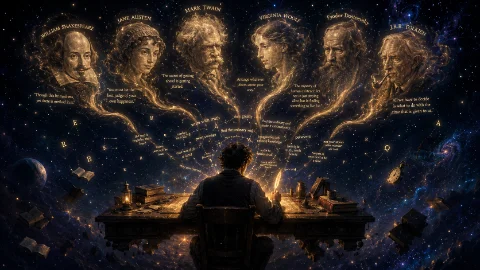
Here are six indie authors sharing the lessons that changed how they write.
1. Write What You Love, Everything Else Is Garbage
J. Kevin Tumlinson, author of archaeological and technological thrillers, has written hundreds of manuscripts across his career. His advice is simple but brutal.
"If you want my best heartfelt advice, it's this: Only write what you love. Everything else is garbage."
It sounds harsh, but Tumlinson means it. Writing is too difficult, too time-consuming, and too emotionally draining to spend on stories you do not care about. Readers can tell when an author's heart is not in it. The passion, or lack of it, bleeds through every sentence.
Tumlinson also warns against the arrogance of thinking your first draft is perfect. "I think some part of me thought it was magic. 'If they would just publish my brilliant book, they'd make millions and so would I. And then they'd know what a genius I am!'" Over time, he learned that publishing is a team effort and that patience and maturity matter as much as talent.
2. Write for Yourself First
Tyler Wittofsky, author of Coffee, Alcohol, and Heartbreak, offers advice that sounds simple but is surprisingly hard to follow.
"Write for yourself first. The moment you stop trying to please everyone else and start focusing on the story you want to tell, your voice becomes authentic, and that's when the magic happens."
This is a recurring theme among successful indie authors. When you write to please an imagined audience, you end up with something generic. When you write the story only you can tell, you create something that no one else could have written. And that is what readers actually want.
3. Read Widely in Your Genre and Don't Rush to Publish
C.J. Archer, author of the Cleopatra Fox Mysteries and other bestselling series, has been an indie author for years. Her advice is practical and patient.
"To learn to write well, new authors should read books in their genre to learn why successful authors are successful. Don't rush to publish. Set the manuscript aside and work on something else then come back to it months later with fresh eyes."
Archer never skips this step. She sets every manuscript aside for three months before giving it a final polish. By that point, she can see the story as a reader rather than its creator. It is a discipline that has saved her from publishing work that was not quite ready.
She also emphasises the fundamentals: "While a strong description, cover, and title are essential, a page-turning story always has been and still is the most important ingredient."
4. Find Your People
Jourdana Webber, author of Unconventionally, Elle, faced hundreds of rejections before choosing to self-publish. Her advice for new authors is about community.
"Find your people: your writer friends and/or book club friends who will support you and build you up, and be fine with a group chat of strangers who all happen to love Taylor Swift. They will be the ones with you when imposter syndrome strikes and you need a reminder of how amazing and talented you are."
Webber also stresses the importance of investing in professional editing and cover art. "By creating a book that meets the industry publishing standards, you separate yourself and your book."
5. Take Risks and Let the Ego Go
Kimberly Lynn Hanson, author of I Am The Devouring Dark, offers advice that pushes writers outside their comfort zones.
"Take risks. Write the things you think you can't. Even if you don't think you are skilled enough, I promise, the challenge will improve your craft and your storytelling ability. And who knows, it might even be the thing that gets the attention."
Brenda Radchik, author of Insects Don't Bleed, echoes this sentiment from a different angle.
"Readers don't care about how much you know or how intelligent you are. They are here for the story; therefore, every word you write should be in service of that story. Writing is an act of setting the ego aside in favor of what works on the page."
The message is clear. Great writing is not about showing off. It is about serving the story.
6. Do Not Define Success by What Others Achieve
E.J. Dawson, author of Behind the Veil, offers a reminder that is easy to forget in the noisy world of indie publishing.
"Don't define your own success by the things you see others achieving. It is very often outside your control, and you can blame yourself and your writing unnecessarily. This industry is very subjective, that you wrote a novel at all is incredible. Don't let anyone belittle you for that, even yourself."
It is a grounding perspective. In an industry where comparison is constant and validation is scarce, Dawson reminds us that finishing a book is already an achievement worth celebrating.
What These Authors Share
These six authors write different genres in different parts of the world. But their advice overlaps in meaningful ways. Write what you love. Write for yourself. Read widely. Take your time. Find your community. Take risks. And do not measure your worth against someone else's success.
The best writing advice does not come with a formula. It comes from authors who have been through the struggle and come out the other side. These six have. And their words are worth listening to.